
Context and Importance
Gotham FC had the best regular season in the NWSL in 2026 and lifted the NWSL Shield, the trophy for the team that finishes first. In theory, that guarantees the biggest possible playoff edge: playing at home.
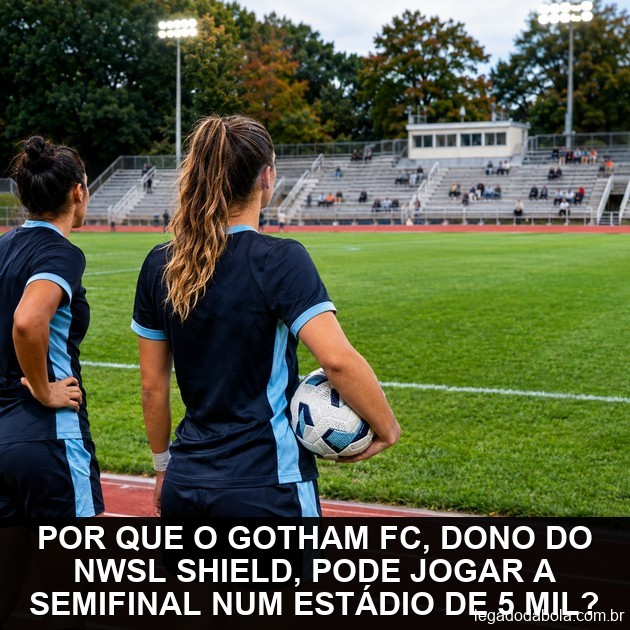
In practice, the prize could become a headache. According to ESPN, league-wide venue issues could force Gotham to play a potential semifinal at Icahn Stadium in New York, a track and field venue with about 5,000 seats.
This matters because it touches a sensitive point in women's soccer: infrastructure. The world's strongest league in attendance and investment still lacks control over its own venues in decisive moments.
Gotham FC won the 2026 NWSL Shield and, even so, may not play the semifinal at its usual home.
What Happened
ESPN reported on November 6 that Gotham could be forced to move a potential semifinal scheduled for the following week. The reason given is a series of scheduling and venue availability conflicts across the league.
Gotham plays at Sports Illustrated Stadium, formerly Red Bull Arena, in Harrison, New Jersey. The stadium is shared with MLS side New York Red Bulls, which naturally complicates the late-season calendar.
The alternative mentioned is Icahn Stadium on Randall's Island, New York. It is a traditional athletics venue, with a running track around the pitch and a much smaller capacity than the club's current home.
Impact on the Club and the Competition
For Gotham, the move directly affects an advantage earned over months. Home playoff games mean a familiar pitch, a preserved routine and a friendly crowd. A track stadium, with fans far from the field, greatly reduces that effect.
There is also a financial impact. A semifinal in a 5,000-seat venue limits ticket sales in what would be the club's most attractive game of the year so far.
For the NWSL, it is a matter of image. The league keeps growing in viewership, sponsorship and franchise value, and a semifinal in a makeshift venue sends the opposite message.
Winning the regular season should be a reward, not a logistical problem.
Reaction from the Soccer World
The news spread quickly through the US sports media. The general tone was surprise that the best regular-season team still had no guarantee of where it would play.
Fans followed the same line. Many recalled that women's soccer in the US draws big crowds and asked why playoff dates and venues are not secured in advance.
Another part of the debate targeted shared stadiums. Several NWSL clubs share venues with MLS or other sports teams, and the end of the season tends to concentrate scheduling clashes.
The lack of control over playoff venues exposes an old NWSL weakness: sharing stadiums with other leagues.
Relevant History
Gotham was born as Sky Blue FC, one of the NWSL founding clubs in 2013. Before that, under the same name, it won the defunct WPS in 2009. In 2021 it adopted its current name and invested heavily in the squad.
The turnaround came in 2023, when Gotham went from a poor previous season to winning the NWSL title, beating OL Reign 2-1 in the final in San Diego. Brazilian full-back Bruninha was part of that squad.
The 2026 Shield crowns that rebuild. It is a trophy that measures consistency across the whole season, something the club chased for years.
Founded as Sky Blue FC, the club won the WPS in 2009 and the NWSL in 2023, already as Gotham FC.
Numbers and Statistics
The size gap between the options sums up the problem. Gotham's usual home holds about 25,000 people, while Icahn Stadium holds around 5,000.
The NWSL playoffs have featured eight teams since 2024, with single-game quarterfinals, semifinals and final. That is why every home game is so valuable.
The contrast grows when you remember that the New York and New Jersey region hosted the 2026 World Cup final at MetLife Stadium just a few months earlier.
The same region that hosted the 2026 World Cup final may see the top US women's league semifinal in a track stadium.
What Comes Next
The first step is on the pitch. Gotham must get through the quarterfinals for the semifinal, and the stadium debate, to become real.
Meanwhile, the league and the club must confirm the venue. As of the report, Icahn Stadium was a possibility, not a final decision.
In the long run, the case should pressure the NWSL to review how it books playoff dates and venues, especially for clubs that share stadiums with teams from other leagues.
Expert Opinion
The Gotham episode goes beyond a scheduling fix. It shows that the growth of women's soccer in the US has not yet come with structural independence.
Clubs with their own stadium, or with guaranteed contractual priority, gain an edge that does not show in the table. That is what separates a solid project from one that depends on someone else's calendar.
If the semifinal does end up at Icahn Stadium, Gotham will have to prove on the pitch that its strength does not depend on its address.
In Gol's view, the NWSL has plenty of product, audience and talent. What is missing is making sure the best team of the season plays its semifinal on a stage worthy of what it achieved. As long as the playoffs depend on leftover dates in shared stadiums, stories like this will keep happening.