
Context and Importance
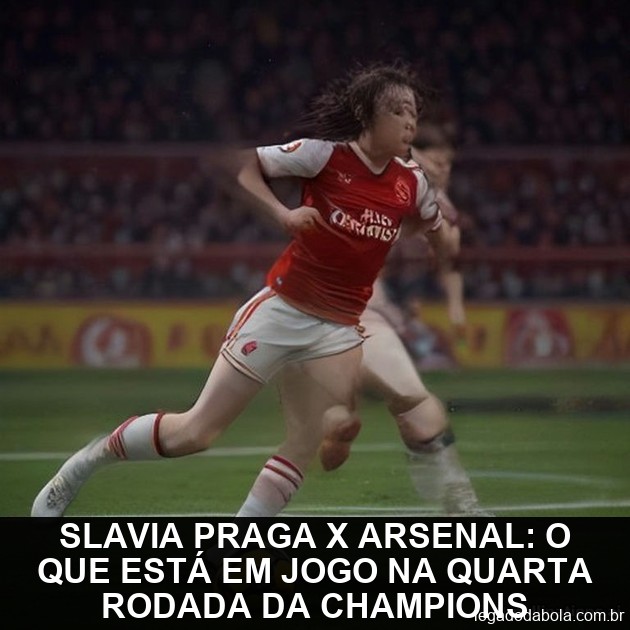
Arsenal visit Slavia Prague at the Fortuna Arena for matchday four of the Champions League league phase. On paper it looks settled. In practice, this is exactly the kind of night that punishes a visiting side that shows up relaxed.
The stakes come from the new format. In the league phase, every point feeds into a single 36-team table, and finishing in the top eight means direct qualification for the round of 16, with no knockout playoff in February.
Arsenal currently sit inside that automatic qualification zone. Slavia Prague are in the opposite position: still without a win in the competition and in need of home points to keep their European hopes alive.
Finishing in the top eight of the league phase means direct qualification for the round of 16 and skips the February playoff.
What Happened
Matchday four of the league phase has put Arsenal on the road. The game takes place at the Fortuna Arena, Slavia Prague's home ground in the Czech capital, on a full European midweek.
The English side travel in a confident spell of the season, with their defence as the main asset of Mikel Arteta's team. The challenge is carrying that standard away from the Emirates Stadium, in a stadium and on a pitch that have historically troubled visitors.
Slavia Prague, for their part, will lean on what has always worked: intensity, a high press, balls into the box and a hostile atmosphere. It is the classic home-underdog script in the Champions League, and the Czechs execute it better than most.
Impact on the Clubs and the Competition
For Arsenal, a win consolidates their direct route to the round of 16 and buys room to manage the calendar. With the Premier League, the League Cup and the Champions League running at once, early points allow key players to be rested later.
A slip changes the maths. In the league phase, the gap between eighth and fifteenth is often only a couple of points, and an away draw can push a team into the February playoff, adding two extra fixtures to an already crowded month.
For Slavia Prague, the situation is simpler and harsher. Without a win, qualification depends on results beyond their control. Beating Arsenal at home would revive every calculation and would be worth the whole season in prestige alone.
In the league phase, an away draw is no disaster. But it is the sort of dropped point that shows up in the table come January.
Reaction Across Football
The English press has framed the match as a maturity test. The prevailing read is that this Arsenal side has grown precisely in its ability to win unglamorous games that used to slip away.
Among Arsenal supporters, the mood online mixes confidence with caution. Memories of European campaigns derailed by apparently easy fixtures still linger, and nobody treats a trip to Eastern Europe as a formality.
In the Czech Republic, the game carries the weight of an event. Hosting one of English football's biggest names at the Fortuna Arena mobilises the city and guarantees a full house, with local fans knowing nights like this do not come around every season.
The Fortuna Arena in Prague has hosted a continental final: it staged the 2013 Europa League decider.
Relevant History
Slavia Prague are one of the most traditional clubs in Czech football and have appeared regularly in UEFA competitions in recent seasons, alternating between the Champions League and the Europa League. They are no newcomer on the continental stage.
Over recent years the club has built a reputation as an awkward opponent for English sides at home, with European runs in which they knocked out or held favourites. The Fortuna Arena atmosphere is an essential part of that story.
Arsenal, meanwhile, returned to the top of the Champions League after years away and rebuilt their European identity under Arteta, reaching the decisive stages and treating the competition as a genuine priority rather than a consolation.
Slavia Prague were founded in the 19th century and are one of the two great clubs of the Czech capital, alongside rivals Sparta Prague.
Numbers and Statistics
The Champions League league phase gives each club eight matches against eight different opponents, four at home and four away. There are 36 participants in a single table, rather than the old groups of four.
Qualification works in three bands. First to eighth go straight into the round of 16. Ninth to twenty-fourth play a two-legged playoff. Twenty-fifth to thirty-sixth are eliminated, with no Europa League safety net.
That is why a fourth matchday matters so much. At the halfway point, the accumulated return decides whether the rest of the campaign is about management or about survival.
What Comes Next
Whoever wins leaves the round with the picture largely settled. Arsenal would manage an advantage across the four remaining games, and Slavia Prague would be back in the fight for a playoff place.
On the probable line-ups, Arsenal are expected close to full strength, with Arteta keeping his defensive base and possibly rotating midfield and attacking pieces around the English calendar. Slavia are likely to start compact, banking on set pieces and transitions.
After this round, both sides return to domestic duty before their next European fixtures. For Arsenal, the Premier League remains the main gauge of the season.
Expert Opinion
A home-underdog Champions League night follows a familiar script: the first twenty minutes decide almost everything. If the favourite survives the early pressure without conceding, the game opens up and technical quality takes over.
The real risk for Arsenal is not Slavia's individual quality, it is the context. Pitch, temperature, crowd and an opponent with nothing to lose form a combination that has brought down better teams on European nights.
If Arsenal bring the same defensive discipline they have shown this season, they get the job done. The catch is that discipline on the road, after a midweek trip, is the hardest part to sustain.
In the new Champions League, one dropped away point sinks nobody on its own. But the sum of those points separates who rests in February from who plays two extra games.
Line-ups published before kick-off are probable only. Official confirmation arrives about an hour before the match.