Context and Importance
The FA Cup is the oldest knockout competition in the world. Every year, hundreds of amateur and semi-professional clubs enter the qualifying rounds dreaming of a tie against a Premier League giant.
That is the setting for the case of Mulbarton Wanderers and Woodford Town. The two clubs met in a qualifying tie and, days later, were told the match would have to be replayed.
The reason is a refereeing error. The Football Association's decision opened a debate that goes well beyond two small clubs: can a referee's mistake overturn a result earned on the pitch?
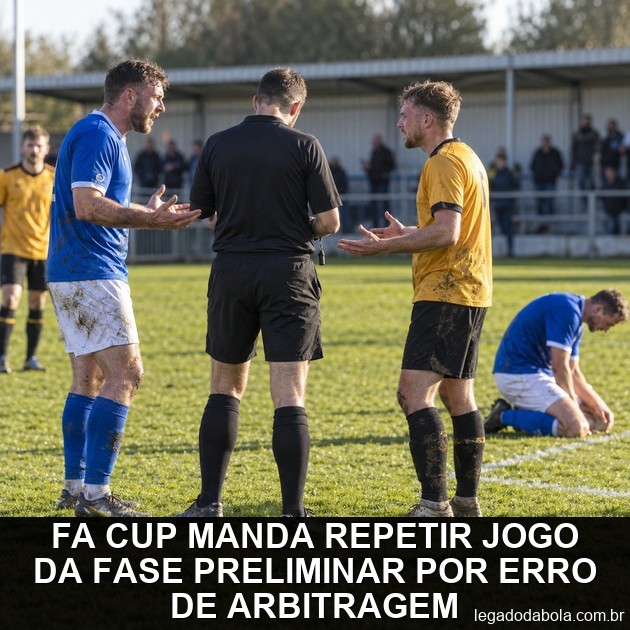
The FA ruled that the tie between Mulbarton Wanderers and Woodford Town must be played again because of a referee's error.
What Happened
According to BBC Sport, Mulbarton Wanderers were told they must replay their FA Cup qualifying tie against Woodford Town. The reason given by the governing body is an error made by the referee during the match.
The club said it was "deeply upset" by the decision. In Mulbarton's view, the result achieved on the pitch should stand, and the replay punishes those who did nothing wrong.
The exact details of the referee's mistake were not widely disclosed at the time of publication. What is clear is that the FA considered the error serious enough to void the result and order a new match.
Impact on the Club and the Competition
For clubs in England's lower tiers, every FA Cup match carries financial weight. Prize money for advancing, however modest, helps pay the bills of clubs run by volunteers and members.
Replaying a match means costs for travel, the pitch and officials. It also means reorganising a regional league calendar that is already tight early in the season.
On the sporting side, the team that won on the pitch loses the advantage it earned. The opponent gains a second chance it would not otherwise have.
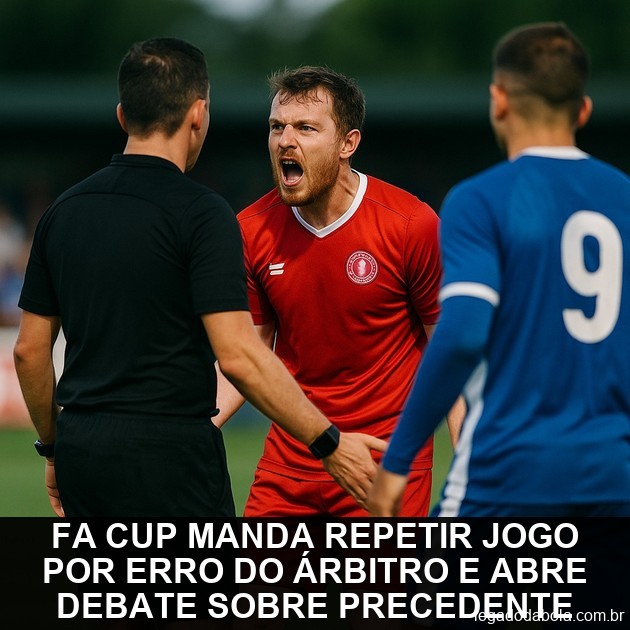
A referee's error cost an amateur club the right to see its result stand.
Reaction from the Football World
The reaction in the English press was immediate. The BBC itself put the central question in its headline: will this set a precedent?
On social media, fans of small clubs were divided. Some believe the governing body simply corrected an injustice. Others fear that, from now on, every defeat will turn into a request for annulment.
Mulbarton Wanderers made their unhappiness public, which is rare in English non-league football, where clubs usually accept FA decisions quietly.
If refereeing errors start justifying replays, the FA could open the door to a flood of appeals in the qualifying rounds.
Relevant History
The FA Cup was born in 1871 and, for most of its history, drawn ties were settled by replays. That tradition has been gradually reduced over the decades.
From the 2024-25 season, the FA abolished replays from the first round proper onwards. In the qualifying rounds, however, replays still exist for matches that end level.
Replaying a match because of a referee's error, rather than a draw, is something quite different. In football, the general rule is that the referee's on-field decisions are final, even when wrong. Exceptions occur only when there is a clear breach of the laws of the game, not a simple error of judgement.
Since 2024-25, replays no longer exist from the first round proper of the FA Cup, but they remain valid in the qualifying rounds.
Numbers and Statistics
The FA Cup is huge in scale. More than 700 clubs enter each edition, and the vast majority start in the qualifying rounds, months before Premier League teams take the field.
There are six qualifying rounds before the first round proper: extra preliminary, preliminary and four qualifying rounds. Only then do League One and League Two clubs enter the competition.
Cases of matches voided because of refereeing errors are extremely rare in this competition, which explains the attention the Mulbarton case has received.
What Comes Next
The two clubs now need to set a new date for the tie. The winner stays in the competition and plays in the next qualifying round.
Mulbarton Wanderers could try to appeal the decision, but the FA's structure leaves little room to reverse such orders on short notice.
What the football world will watch is how the FA handles similar cases from here on. An isolated decision is one thing. An informal rule is something else entirely.
Expert Opinion
Football has always lived with refereeing errors. The idea that the referee's decision is final exists precisely to protect the game from permanent uncertainty.
By ordering a replay, the FA signals that there is a limit. Errors that breach the laws of the game, not just the interpretation of an incident, can indeed void a match.
The risk is the precedent. Without public and clear criteria, every defeated club will have reasons to ask for the same treatment. The governing body needs to explain, transparently, where the line is.
The Mulbarton case is not about two amateur clubs. It is about how far a governing body can go to correct the referee without destroying the authority of the person with the whistle. Without clear criteria, today's correction becomes tomorrow's chaos.