Context and Importance
The FA Cup is the oldest club competition in the world. Every year, hundreds of amateur teams enter the preliminary rounds dreaming of a tie against a Premier League giant. For small clubs, every round means prestige, gate receipts and a piece of history.
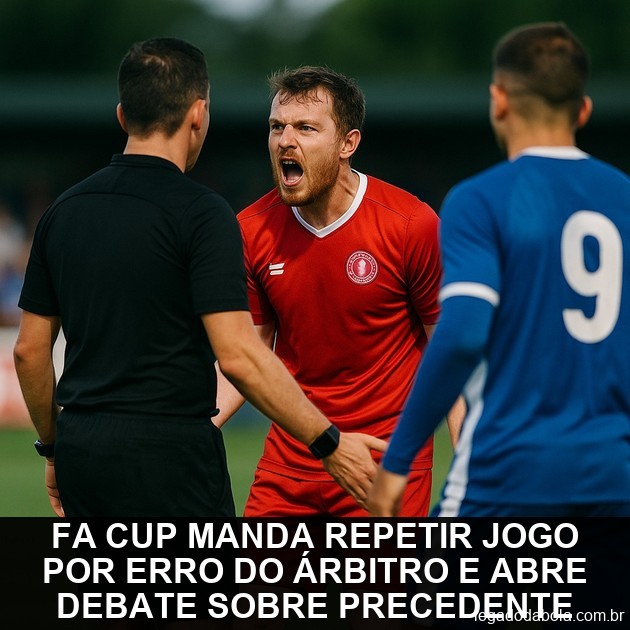
That is the backdrop for the case of Mulbarton Wanderers, a Norfolk club that described itself as "deeply upset" after being told by the Football Association that it must replay its match against Woodford Town. The reason: a referee's error during the game.
The story, reported by BBC Sport on Friday, revives an old debate in English football. When the referee gets it wrong, who pays the price? In the FA Cup, the answer is often harsh: the result on the pitch can be voided and the match played again from scratch.
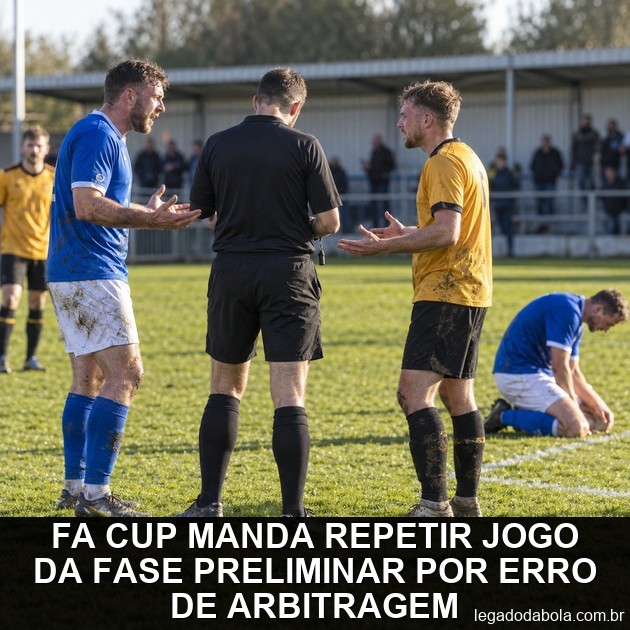
The FA ruled that the qualifying tie between Mulbarton Wanderers and Woodford Town must be replayed, voiding the result achieved on the pitch.
What Happened
Mulbarton Wanderers and Woodford Town met in the qualifying rounds of the 2026-27 FA Cup. Both are non-league clubs, playing in the amateur and semi-professional tiers below the English professional pyramid.
After the match, the FA identified that the referee had made an error in applying the laws of the game. According to BBC Sport, the consequence was a ruling that the tie must be replayed in full rather than stand with the original score.
Mulbarton Wanderers reacted with frustration. The club said it was "deeply upset" by the decision. The team feels it did its job on the pitch and is now being forced to repeat an effort it had already made, because of a mistake that was not its own.
Impact on the Club and the Competition
For an amateur club, replaying a match is no small matter. It means new logistics, extra travel costs, players who have jobs outside football, and the very real possibility of losing a place that seemed already secured.
There is also a financial impact. The FA Cup awards prize money for every round won, sums that represent a meaningful share of the annual budget of clubs at this level. Elimination in the replayed tie could be costly.
From the competition's point of view, the decision creates a knock-on effect. The winner of the new match must be determined before the next round, which squeezes the calendar and may force the FA to reschedule other fixtures.
In amateur football, a replayed match can be the difference between finishing the season in the black or in the red.
Reaction from the Football World
The reaction among grassroots football fans was immediate. On social media, many backed Mulbarton Wanderers, arguing the club is being punished for someone else's mistake. Others defended the FA, pointing out that the integrity of the rules must come first.
The British press treated the case as another example of the challenges of officiating in the lower leagues, where there is no VAR, referees are semi-professional and technical support is minimal.
Non-league communities also raised a recurring question: should the FA create a compensation mechanism for the wronged club when the error comes from a referee appointed by the governing body itself?
The wronged club committed no offence, yet must bear the costs and sporting risk of playing again.
Relevant History
Matches replayed because of officiating errors are not unheard of in English football. Throughout the history of the FA Cup, there have been ties voided for irregularities such as fielding an ineligible player or misapplication of the laws.
Until a few seasons ago, the FA Cup also kept its tradition of replays: drawn ties were played again at the away team's ground. That format has been scaled back in the later rounds, but the idea of "playing it again" is part of the competition's DNA.
For clubs like Mulbarton Wanderers and Woodford Town, the FA Cup is the only chance to appear on the national radar. Stories of tiny teams advancing through several rounds to face professional sides have fuelled the competition's mystique for more than a century.
The FA Cup was first played in the 1871-72 season, making it the oldest club competition in world football.
Numbers and Statistics
The FA Cup is enormous in scale. More than 700 clubs enter the competition each season, the vast majority in the preliminary and qualifying rounds, which begin as early as August.
There are six knockout rounds before the so-called first round proper, when League One and League Two clubs enter. Premier League and Championship sides only join in the third round, in January.
That means an amateur club must win a long marathon of matches just for the chance to face a professional opponent. Every extra match, like the one Mulbarton must now replay, makes that journey even harder.
What Comes Next
The next step is setting a new date for the tie between Mulbarton Wanderers and Woodford Town. The FA must fit the match in before the next round of the competition, which should happen in the coming weeks.
Mulbarton may still try to challenge the ruling, although appeals against FA regulatory decisions are rarely successful. The club will have to decide whether to spend energy on a legal battle or focus on winning on the pitch.
Whatever the outcome, the case is likely to reignite discussions within the FA about support for officials in the lower tiers and about compensation mechanisms for clubs harmed by referee errors.
There is no VAR in the FA Cup qualifying rounds. Every decision depends solely on the referee and the assistants on the pitch.
Expert Opinion
The Mulbarton case lays bare a contradiction in modern football. In the big leagues, VAR corrects errors in seconds. At the base of the pyramid, a referee's mistake can force an entire club to redo a week's work.
The FA is right to protect its regulations. But the governing body must recognise that when the error comes from an official it appointed, the wronged club deserves some form of compensation. Replaying the match solves the sporting question, not the financial one.
The lesson is clear. Rules exist to be applied rigorously, but also with common sense. And common sense says that those who did nothing wrong should not foot the bill alone.
The FA's ruling protects the integrity of the competition, but exposes how fragile amateur football is when faced with errors it does not control. Until VAR reaches the grassroots, the governing body must at least offer small clubs a fair compensation mechanism.