Context and Importance
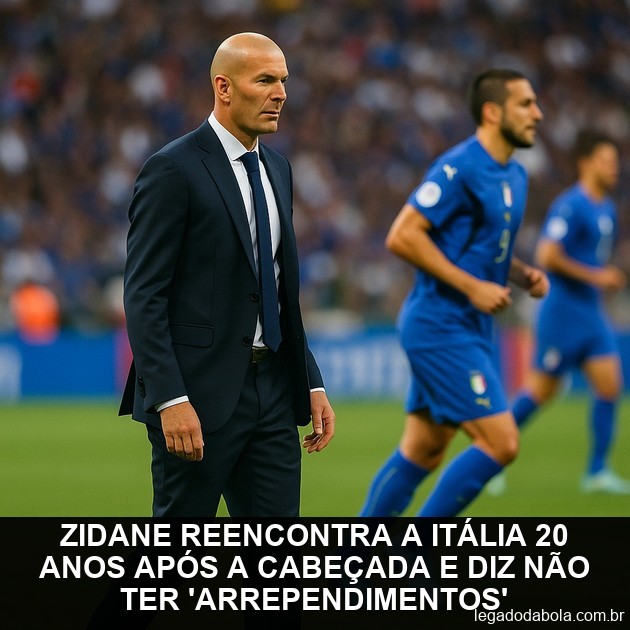
The 2006 World Cup final left one of the most remembered images in football history. Almost 20 years later, it is back at the center of the conversation, with Zinedine Zidane now leading the French national team.
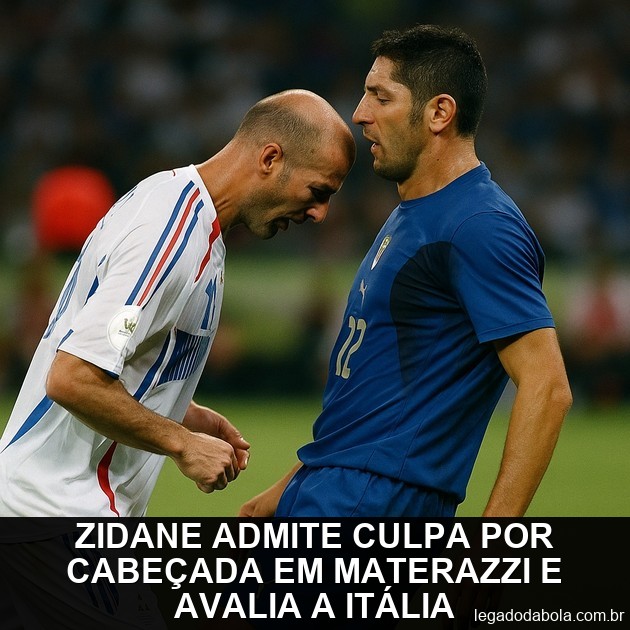
In his first press conference before facing Italy as a coach, Zidane could not escape the question about the headbutt on Marco Materazzi. According to Trivela, he admitted fault for the act.
Zidane spoke again about the Materazzi headbutt in his first press conference before facing Italy as France coach.
The story matters because it joins two chapters: the idol who left football sent off in a final and the coach who now tries to write another chapter against the same rival.
What Happened
Zidane gave the interview before the France vs Italy match, his first against the Italians as coach of Les Bleus. The press conference included, of course, the question that has followed him since 2006.
He assessed Italy past and present and answered about the headbutt. According to Trivela, the coach acknowledged that he was wrong at that moment.
There are no literal quotes here. What matters is the general sense of the answer: someone facing the episode without running from it.
Impact on the National Team and the Competition
For France, settling the subject in the first press conference keeps it from hovering over match preparation. The focus returns to the ball and the team.
For Italy, the match gains an extra edge. Every meeting between the two sides carries the memory of Berlin, and Zidane on the bench reignites it.
Zidane changed sides: from protagonist of the most talked-about scene of 2006 to a coach who needs to beat Italy.
For the competition, the match becomes one of the most discussed because of its historical appeal.
Reaction from the Football World
The press went back to the episode as soon as Zidane's answer gained space. The headbutt remains a topic whenever his name appears near Italy.
Among fans, the debate is old and still divided. Some recall the provocation on the pitch, others believe nothing justifies violence in a final.
Zidane treating the subject frankly tends to be well received. Admitting a mistake usually weighs more in favor of the speaker than against.
Relevant History
The final was played in Berlin on July 9, 2006. Zidane opened the scoring from the penalty spot in the 7th minute, and Materazzi equalized with a header in the 19th.
The match ended 1-1 and Italy won the shootout 5-3, claiming a fourth World Cup title.
Zidane was sent off in the 110th minute of extra time after striking Materazzi in the chest with his head. It was the last match of his career.
Eight years earlier, in 1998, he had scored two headed goals in the final against Brazil and led France to the title. The 2006 World Cup closed the cycle very differently.
Numbers and Statistics
The numbers of the 2006 final help explain why the scene weighs só much. It was a balanced decider, settled only in the penalty shootout.
Even though he was sent off in the final, Zidane was named the best player of that World Cup.
As a coach he also has credentials: he won three straight Champions League titles with Real Madrid, from 2016 to 2018.
What Comes Next
The next step is the France vs Italy match. After the press conference, the headbutt topic is expected to lose strength once the ball starts rolling.
Zidane must show that his team can overcome a traditional opponent with a heavy shirt and a record of resilience in big matches.
For the Italians, the match is a chance to test themselves against a France led by one of the most respected names in world football.
Expert Opinion
Zidane was right not to dodge the question. A coach with this kind of past needs to settle the subject early and calmly, and that is what the answer conveyed.
The headbutt is part of Zidane's biography, but it does not define a career with a World Cup, a Euro, a Ballon d'Or and three Champions League titles as a coach. Admitting the mistake makes him bigger, not smaller.
What matters now is what France does on the pitch. The story of 2006 is beautiful and painful, but the next chapter is decided by the players between the lines.