Context and Importance
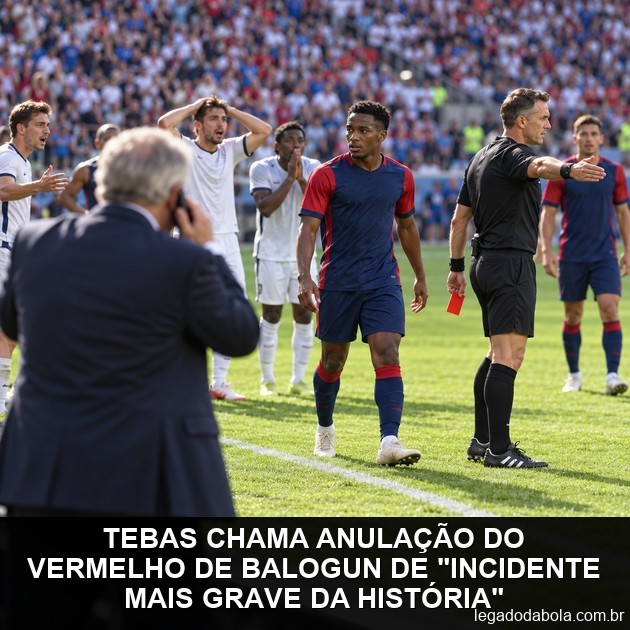
The 2026 World Cup ended in July, but one of its biggest controversies is still alive. On Thursday, October 1, LaLiga president Javier Tebas returned to the Folarin Balogun case with a heavy statement.
For the Spanish executive, overturning the US striker's red card was "the most serious incident in the history of football". That is no small claim from the man running one of the most powerful leagues on the planet.
It matters because this is not just about a card. It is about the most uncomfortable question football can ask itself: do the rules apply equally to everyone, or do they depend on who picks up the phone?
A red card turned into a governance crisis for world football.
What Happened
In the World Cup round of 32, the United States beat Bosnia and Herzegovina. Balogun, who scored in the match, was sent off for a foul on Tarik Muharemović. Under the rules, the automatic ban would rule him out of the next game.
US President Donald Trump confirmed he called FIFA president Gianni Infantino asking for a review. On Sunday, the day before the round of 16 clash with Belgium, FIFA announced the automatic suspension would itself be suspended for one year.
In practice, Balogun was free to play. Infantino said the decision was not influenced by Trump's call, while Trump publicly celebrated the outcome.
FIFA did not erase the card: it suspended the automatic ban for one year, clearing Balogun for the round of 16.
Impact on the Team and the Competition
On the pitch, it made no difference for the Americans. On July 6 in Seattle, Belgium thrashed the United States 4-1, with two goals from Charles De Ketelaere. Malik Tillman scored from a free kick.
Off the pitch, the damage was significant. The Royal Belgian Football Association said it was "astonished" by the decision, claimed it contradicted FIFA rules and said it was investigating all potential options.
For the competition, it set a dangerous precedent. If an automatic ban can be suspended on the eve of a knockout game, any national team now has a reason to challenge similar decisions in the future.
Trump admitted calling Infantino. FIFA denies any political influence on the decision.
Reaction from the Football World
Belgium answered with irony. After the rout, the Belgian national team's official account posted a message widely read as a jab: "Overturn this".
Tebas went straight to the point. According to ESPN, he criticized FIFA for overturning a red card because the president of a country called the FIFA president, and demanded that the governance issue be addressed clearly.
He also targeted Infantino personally, saying he is not someone who contributes to the growth of football and that "the Infantino era is over". Tebas and FIFA had clashed before, but the tone has now escalated.
Relevant History
Reversing a sending-off at a World Cup is extremely rare. The best-known previous case dates back to 1962 in Chile and involves a Brazilian idol: Garrincha.
Sent off in the semifinal against the hosts, he was cleared to play the final against Czechoslovakia after political and diplomatic maneuvering behind the scenes. Brazil won and lifted their second world title.
The comparison shows the scale of the 2026 episode. More than 60 years passed without anything similar at a World Cup, and when it returned, politics was involved once again.
In 1962, Garrincha was sent off in the semifinal and still played the final. Brazil became two-time world Champions.
Numbers and Statistics
Balogun reached the round of 16 as the US top scorer at the tournament. He scored twice against Paraguay in the group stage and once against Bosnia.
His clearance did not change the team's fate. The loss to Belgium was the fourth US elimination in the round of 16 in five World Cups, at a tournament played on home soil.
The numbers reveal the paradox: the decision triggered a huge institutional crisis and had no sporting impact on the result.
What Comes Next
Balogun's suspended ban lasts one year. That means the case could resurface if the striker is punished again within that period in FIFA competitions.
Politically, Tebas's words open another front of pressure on Infantino. Demands for more transparent rules on reviewing sanctions are likely to grow among leagues and federations.
It remains to be seen whether FIFA will publicly detail the criteria behind the decision. So far, it has only denied outside influence, without explaining the merits.
Trump had received FIFA's inaugural Peace Prize, which fueled suspicion about his closeness to Infantino.
Expert Opinion
Tebas overdoes the superlative, but gets the diagnosis right. Football history has seen far worse scandals of corruption, match-fixing and violence. Still, the Balogun case touches the heart of the sport: equality before the rules.
What makes the episode corrosive is not the card itself. It is the sequence: a head of state calls, admits calling, and the next day the punishment disappears. Even without causation, the optics are devastating.
For Brazilian fans, the lesson has a familiar taste. Garrincha played the 1962 final and nobody here complained. That is exactly why it is worth reflecting: a good rule is one that applies even when it does not favor us.
Football survives thrashings, refereeing errors and upsets. What it cannot survive is the suspicion that results can be decided by phone. FIFA needs clear, public rules for reviewing sanctions, or every World Cup will have its own Balogun case.