
Context and Importance
The 2026 World Cup has barely started and VAR is already the main topic in bars and on social media. In every World Cup, refereeing decisions can shape entire matches, and this time is no different.
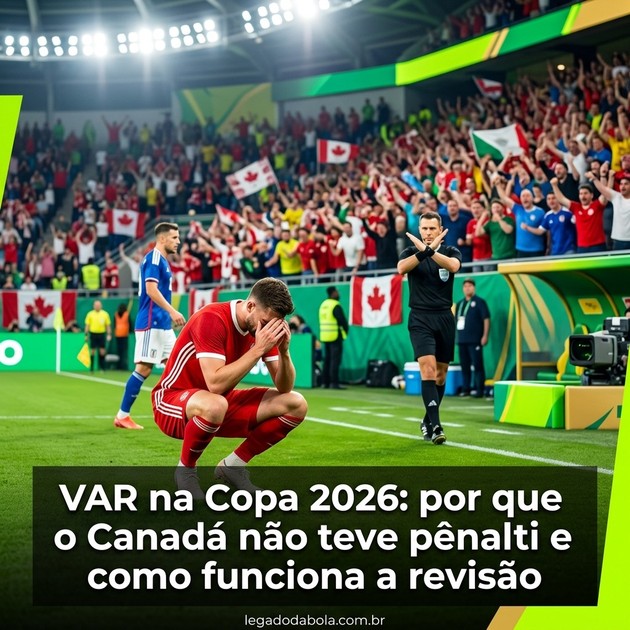
Canada's penalty appeal that went unrewarded is a perfect example of how fans and referees see the same play in different ways. What looks like a clear foul from the stands may be within the rules when analyzed frame by frame.
That is why the protocol matters. Knowing how VAR works helps separate fan outrage from the referee's technical decision. It is the only way to discuss the play with an argument, not just emotion.
What Happened
During the match, Canada complained about an incident inside the box that, in the team's view and that of part of the crowd, should have been a penalty. The on-field referee waved play on.
VAR stepped in to review the play, as it does for every goal, penalty, direct red card and mistaken identity. Its role is not to re-referee everything, but to correct a clear and obvious error.
After the check, the on-field decision was upheld. For VAR, there was no obvious error to justify sending the referee to the monitor. No clear error, no intervention - that is the heart of the protocol.
Impact on the Match and Tournament
Plays like this change the mood of an entire World Cup. A penalty given or ignored can decide a group, a knockout tie and even a nation's fate in the tournament.
When a team like Canada feels wronged, the pressure on referees grows in the following matches. Every new play inside the box gets watched under a magnifying glass by press and fans.
For the competition, the effect is twofold. On one side, VAR seeks fairer results. On the other, every controversial decision reignites the debate about how much technology really ends the doubt.
Reaction from the Football World
Whenever a penalty goes unmarked at a World Cup, the reaction is immediate. Pundits split, fans flood social media and former referees are called to explain the rule on TV.
Part of the press tends to back the referee when the play respects the clear and obvious error standard. Another part demands more courage to use the monitor in cases of reasonable doubt.
In the middle sits the fan, who wants justice for their team and distrusts the technology when it works against them. That tension is part of modern football and will not fade soon.
Relevant History
VAR debuted at World Cups in the 2018 edition in Russia, and has been a fixture ever since. The promise was to reduce serious refereeing errors in decisive plays.
Since its arrival, the handball rule and penalties have become the most controversial topics. The interpretation of what counts as a punishable handball has changed several times, which confuses even lifelong fans.
The core standard, however, has remained. VAR exists to correct the clear and obvious error, not to re-analyze every contact inside the box. Understanding this explains many decisions that seem strange at first glance.
Numbers and Statistics
VAR automatically reviews four types of play: goal, penalty, direct red card and mistaken identity in a punishment. Outside those categories, it does not intervene.
When reviewing a possible penalty, the vídeo team checks factors such as contact, arm position, distance and whether the ball was genuinely contested. Only then does it recommend a review or not.
The final decision still belongs to the on-field referee, who watches the footage on the pitchside monitor. VAR suggests, but the main referee always decides whether to award the penalty.
What Comes Next
With the tournament underway, new VAR incidents will appear every round. The deeper the stages go, the greater the pressure on each refereeing call.
Canada is likely to stay in focus when refereeing comes up, since teams that feel wronged are often cited in comparisons in later matches. The theme will return whenever a similar play happens.
For fans, the best path is to follow each match while understanding the protocol. That way you can judge the play with criteria, without falling for the trap of thinking every handball in the box is a penalty.
Expert Opinion
VAR was not made to end controversy, but to reduce gross error. Anyone expecting the technology to bring total consensus will be frustrated World Cup after World Cup.
In Canada's case, upholding the on-field decision shows the system is following the clear and obvious error protocol. It may not please everyone, but it is consistent with how the tool was designed.
The ideal would be more transparency, with public explanations for each reviewed decision. Until that becomes a rule, the way forward is to know the protocol and discuss football with information, not just passion.