Context and Importance
The Netherlands' exit from the 2026 World Cup left open wounds. When a nation with such tradition falls earlier than expected, the hunt for culprits begins immediately.
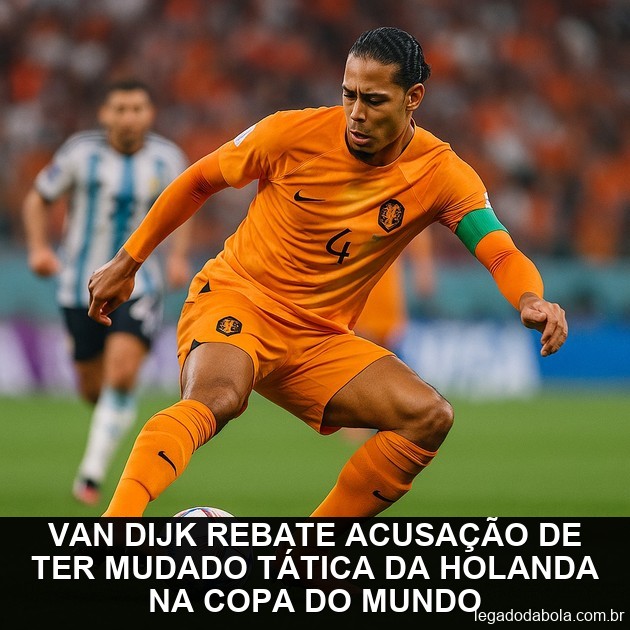
In recent weeks, a version gained traction in the Dutch press that Virgil van Dijk, the team captain, had interfered in Ronald Koeman's tactical choices during the tournament.
Now the Liverpool defender has decided to respond. And he did so bluntly, turning a backroom rumour into front-page news.
Van Dijk called the claims "utter nonsense" and "completely baseless", according to ESPN.
What Happened
According to ESPN, Van Dijk was asked about reports that he had altered the Netherlands' tactics in the match that sealed their elimination. The captain rejected the idea categorically.
He said the version was "completely baseless" and used the words "utter nonsense" to describe the narrative that he had gone over the head coach.
Koeman, in charge since 2023, left the job after the World Cup. His departure opened the door to speculation about what went wrong inside the dressing room.
Impact on Club, National Team and Competition
For the Netherlands, the episode comes at a delicate time. The federation is looking for a new coach and needs to rebuild the confidence of a frustrated squad.
Van Dijk has been the strongest leader in the group since taking the armband in 2018. Any doubt about the relationship between captain and coaching staff directly affects the next cycle.
At Liverpool, the defender remains captain and a central figure. The English club would rather the matter die quickly so it does not affect the 2026-27 season.
When a captain has to publicly deny outranking his coach, the problem is already bigger than tactics.
Reaction from the Football World
Part of the Dutch press treated Van Dijk's denial as expected, but questioned why the story surfaced right after Koeman's departure.
Among fans, opinion was divided. Some see the captain as a convenient scapegoat. Others point out that experienced players always give their views, and that is no crime.
In England, Liverpool supporters followed the case closely, used to seeing Van Dijk as an active voice on and off the pitch.
The debate exposes an old question: how far does a captain's autonomy to suggest changes to the coach go?
Relevant History
The Netherlands have a complicated relationship with World Cups. They reached three finals, in 1974, 1978 and 2010, and lost them all. They have never lifted the trophy.
In 2018, the Oranje did not even qualify for the tournament in Russia. In 2022, in Qatar, they went out in the quarterfinals to Argentina on penalties, in a match full of tension.
Ronald Koeman had two spells with the national team. The first, from 2018 to 2020, ended with his move to Barcelona. The second began in 2023 and included the Euro 2024 semifinal.
Clashes between stars and coaches are part of Dutch football history, from Cruyff's generation to recent years.
Numbers and Statistics
Van Dijk joined Liverpool in January 2018 from Southampton for around 75 million pounds, a record fee for a defender at the time.
For the Netherlands, he has more than 80 caps and has been captain since 2018, under Koeman himself during the coach's first spell.
With Liverpool, he has won the Premier League, the Champions League and the Club World Cup, and was named PFA Player of the Year in 2018-19.
What Comes Next
The Dutch federation must appoint Koeman's successor. The chosen name will have to calm the group and start the cycle towards Euro 2028.
Van Dijk, at 35, is entering the final stage of his career. His future with the national team depends on the new coach's project and on his own willingness.
At Liverpool, the season continues with the captain at the heart of the defence. Every performance will be scrutinised by those wanting to see whether the national team noise affects him.
Expert Opinion
A captain who gives his opinion is not a captain who gives orders. That distinction must be clear. Van Dijk has always been a leader who talks to the coach, which is natural in any top-level dressing room.
The problem arises when defeat turns dialogue into interference. The narrative against the captain serves to protect other figures, and Van Dijk himself seems to have understood that.
The Netherlands did not lose the World Cup because of a conversation between captain and coach. They lost because, as in other editions, they lacked consistency when the game got tight. Looking for an individual culprit is the easiest path and the least useful one.
Van Dijk's firm response has one merit: it ends the debate before it drags on. For the Oranje, the best scenario is a new coach who truly takes charge and a captain who remains a reference.