Context and Importance
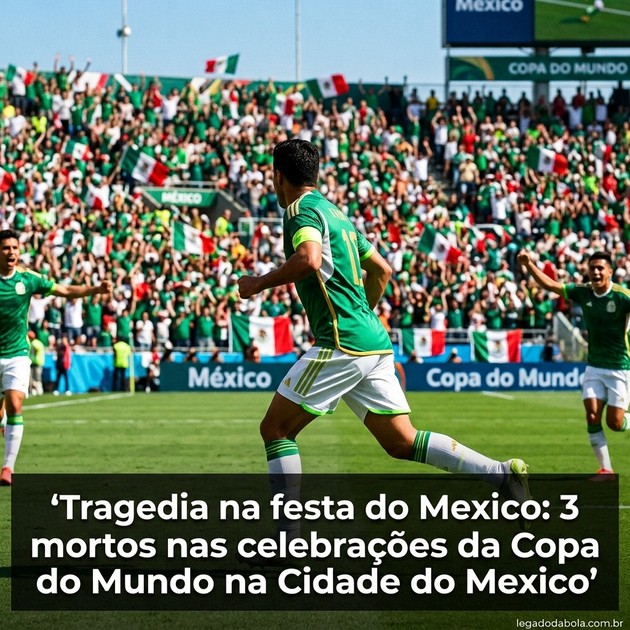
Football has the power to stop nations. And when Mexico took the field at the 2026 World Cup, the Mexican people stopped - and then exploded into the streets. More than 1 million people flooded the avenues of Mexico City to celebrate El Tri's victory over Ecuador. A historic, massive, passionate party.
But the joy came at a bitter price. Three people died during the celebrations, turning a day of euphoria into one of collective grief. The tragedy raises serious questions about safety at mass events and what it means to celebrate in a country that loves football like few others in the world.
The 2026 World Cup is co-hosted by the United States, Canada, and Mexico, and the Mexican people carried an immense expectation. Playing at home - or close to home - amplifies everything. The emotion, the pressure, and when the victory comes, the explosion in the streets.
Three people died during popular celebrations in Mexico City after Mexico's win over Ecuador at the 2026 World Cup.
What Happened
On Tuesday, as the scoreline still echoed across the country, the streets of Mexico City became a human ocean. More than 1 million fans left their homes to celebrate. The Zocalo, the historic center, the main avenues - all taken over by the green and red of the Mexican national team.
The crowd was exuberant, loud, and passionate. Flags, fireworks, chants, hugs between strangers. Mexico had done what their fans hoped for at the home World Cup. But amid this gigantic mass of people, the worst happened: three people lost their lives during the celebrations.
Mexican authorities confirmed the deaths. The specific circumstances of each case were being investigated, but the fact is undeniable: the country's biggest party also became a day of loss for families who went out to celebrate and did not come back.
More than 1 million people in Mexico City streets - one of the largest popular sports celebrations ever recorded in the country.
Impact on the Team and Competition
For the Mexican national team, the win over Ecuador means much more than three points. Playing a World Cup in North America, with stadiums and streets full of green, is a historic opportunity the country has waited decades for. The result fuels hope for a deep run in the tournament.
But the tragedy of the celebrations casts a shadow over the moment. The debate now goes beyond the pitch. Mexico City authorities will have to explain how three people could die at a party that was supposed to be organized to welcome crowds. Safety at large events has become an urgent matter.
The Mexican Football Federation and the government now face a delicate dilemma: celebrating the team's performance while paying respect to the victims' families. It is not an easy equation.
Football unites nations, but uncontrolled celebrations carry a price that no victory can justify.
Reaction from the Football World
News of the deaths spread quickly through international media. BBC Sport was among the first outlets to report the tragedy, highlighting the contrast between the euphoria of more than 1 million people and the grief of the victims' families. The football world reacted with sorrow.
Mexican fans on social media shared conflicting emotions: joy over the victory and pain over the losses. Many called for the national team to dedicate future matches to the victims. Football, which has the gift of uniting people, also revealed its most fragile face when celebrations get out of control.
In international broadcasts, commentators noted that mass celebrations always carry underestimated risks. Mexico City, with tens of millions of inhabitants in the metropolitan area, is one of the world's largest urban centers - and gathering 1 million people in the streets requires planning that is rarely adequate.
Mexico City has been the scene of epic football celebrations before. In 1986, when Mexico hosted the World Cup, the streets experienced similar moments - though today's mass communication amplifies everything on a different scale.
Historical Background
Mexico has an intense and sometimes tragic relationship with major sports celebrations. The country is passionate about football in a way that goes beyond sport - it is a matter of national identity. El Tri carries the weight of an entire people every time they step onto the pitch.
Tragically, sports celebrations around the world have already recorded serious incidents. In Europe, South America, Asia - uncontrolled crowds can turn into catastrophe in minutes. Brazil has experienced moments of tension at state championship finals; Argentina, with its fervent fan culture, also has painful stories. Now Mexico faces this cruel reality.
The 2026 World Cup is special for Mexico not only because of the co-hosting, but also for the symbolism of playing in front of their own people. The Estádio Azteca is the most sacred home of Mexican football. When El Tri wins, the whole country hits the streets. And when 1 million people take to the streets, risks are inevitable without rigorous planning.
Numbers and Statistics
The numbers tell a story of immense proportions. The party was one of the largest human gatherings ever recorded at a spontaneous sports celebration event in Latin America.
Mexico City is one of the world's largest metropolises, with more than 20 million inhabitants in the metropolitan area. Gathering 1 million people represents roughly 5% of that population simultaneously taking to the streets. It is a number that challenges any improvised security structure.
Ecuador, Mexico's opponent, is also a respected side in the South American scene, making the Mexican victory even more significant within the tournament context. The result reverberated across Latin America.
Mexico hosted the World Cup in 1970 and 1986. Both times, popular celebrations were massive. The 2026 edition marks the country's return to the world stage - this time as co-host alongside the USA and Canada.
What Comes Next
The Mexican national team continues in the 2026 World Cup, and the schedule does not pause. El Tri fans will have to balance mourning the victims with supporting the team. Football goes on, but with the awareness that the party cost lives.
Mexico City authorities are expected to announce investigations into the circumstances of the deaths and review safety protocols for potential future celebrations. If Mexico advances in the tournament - and expectations are high - new crowds are inevitable. The question is whether planning will be different this time.
For the football world, this episode reignites the debate about how countries should prepare for mass celebrations at World Cups. It is not enough to hope that everything goes well: it is necessary to plan, structure, and protect those who go to the streets to celebrate what they love.
Expert Opinion
Football is the most popular sport on the planet because it connects people in a way that goes beyond the game itself. When a national team wins, it is not just a result - it is a collective explosion of identity, belonging, and hope. It is impossible and unfair to ask fans not to take to the streets to celebrate.
The problem is not the passion of the Mexican fan - which is legitimate, beautiful, and part of what makes football what it is. The problem is that governments and federations still have not learned to measure the impact of major victories in football-crazy countries. When 1 million people hit the streets, you need a plan worthy of that number. Three deaths are three tragedies that could have been prevented. Let Mexico mourn its victims and let the football world take note: celebrating must be safe, or it is not a celebration - it is a risk.
The legacy of this World Cup for Mexico cannot be just the goals and victories. It must also include the painful lesson that loving football cannot cost anyone their life. The families of the three victims deserve answers, and the country deserves that this never happens again.