Context and Importance
Gianni Infantino is no stranger to risky bets during his time at FIFA. Throughout his tenure as president, he has proposed new competition formats, tournament expansions and commercial partnerships that have divided opinion across world football.
The latest chapter in this series of controversial decisions involved plans to further commercialize the World Cup, treating one of the sport's greatest symbolic assets as a purely financial one. The idea generated immediate discomfort among federations, longtime sponsors and fans.
Understanding why this specific plan failed matters because it reveals the limits of Infantino's power within FIFA itself. Even the most influential figure in world football runs into resistance when tampering with what is most sacred in the sport: the World Cup.
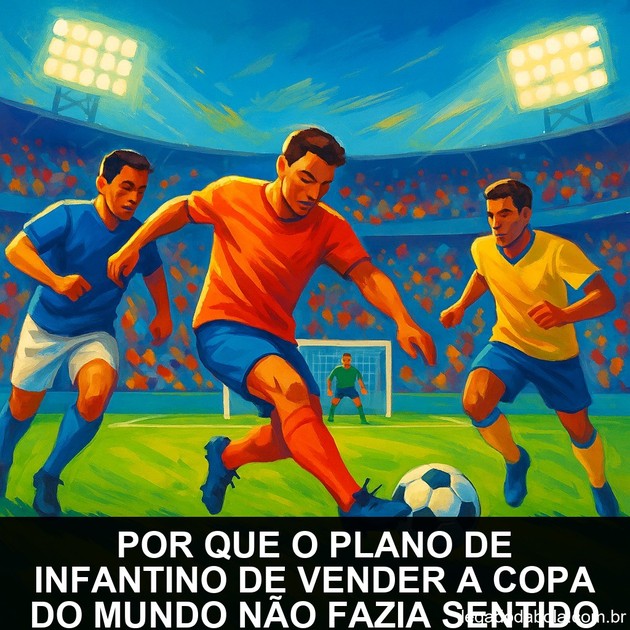
The attempt to treat the World Cup as merchandise exposed a flawed reading by Infantino of the tournament's symbolic value to world football.
What Happened
According to a report from ESPN International, Infantino pushed forward with plans described as ham-fisted and disconnected from reality, both commercially and politically. The proposal sought to further monetize core elements of the World Cup.
This is not the first move of its kind. Over recent years, Infantino has already tested the patience of national federations and continental confederations with ideas like an expanded Club World Cup and changes to the international calendar.
This time, however, the reaction was harsher. The plan ran into resistance from multiple sectors within FIFA's own ecosystem, who saw the proposal as an unnecessary reputational risk for football's most valuable competition.
Not even all the power within FIFA is enough to sell off the soul of the World Cup without facing resistance.
Impact on the Club/National Team/Competition
The World Cup remains the most-watched and commercially relevant sporting event on the planet. Any attempt to alter its commercial structure directly affects national federations, broadcasters and global sponsors who depend on predictability in the format.
National teams already qualified for upcoming editions also feel the indirect impact of these discussions. Instability in FIFA's governance creates uncertainty about the calendar, format and even revenue distribution among federations.
For fans, the episode reinforces a recurring concern: how far the World Cup can be commercially stretched before losing part of what makes it special. This tension between tradition and monetization is not new, but each new attempt by Infantino reignites the debate.
Reaction from the Football World
The fallout from the episode was not favorable to Infantino. Analysts and commentators in international football described the plan as poorly calculated, both from a business standpoint and a political one within FIFA.
Federations that already view other Infantino initiatives with suspicion saw the episode as another example of a decision made without proper alignment with world football's stakeholders.
The international sports press, which had already been closely covering other controversies surrounding Infantino's leadership, treated the case as a symptom of a broader pattern: ambitious decisions made without the political backing needed to succeed.
This is not the first time an Infantino idea has generated internal resistance strong enough to stall its implementation before it even left the drawing board.
Relevant History
Since taking over as FIFA president in 2016, Infantino has built a leadership marked by expansion. He increased the number of teams at the World Cup, pushed for the creation of a Club World Cup in a new format, and constantly sought new revenue sources for the organization.
Some of these initiatives achieved significant commercial success, but they also drew criticism that football was increasingly being treated as a product rather than a cultural and sporting heritage.
The new chapter involving World Cup commercialization plans fits into this history. It is yet another example of a revenue-maximizing attempt that ran into resistance from those who see natural limits to that logic within the sport.
Since 2016, Infantino's leadership has combined aggressive commercial expansion with recurring episodes of internal resistance to his boldest proposals.
Numbers and Statistics
The World Cup remains the largest sporting event on the planet in terms of audience and global reach, surpassing even the Olympic Games in attention concentrated on a single tournament.
The next edition, set for 2026 in the United States, Mexico and Canada, will be the first to feature 48 national teams, a direct reflection of the expansion policy pursued by Infantino since taking over FIFA.
These numbers help explain why any commercial move involving the tournament draws só much attention and resistance: the value at stake, both financial and symbolic, is immense.
What's Next
With the commercialization plan rejected or paused, FIFA is expected to refocus attention on organizing the 2026 World Cup, the first tournament under the new expanded format.
Infantino is likely to keep seeking new revenue sources for the organization, but the recent episode serves as a warning sign about the political limits of that strategy within football itself.
Federations and confederations are expected to closely monitor the dirigent's next moves, especially on sensitive issues that directly touch the competition's identity.
Expert Opinion
The case reinforces something modern football keeps forgetting: there is a limit between monetizing an event and stripping it of its character. The World Cup carries historical and emotional weight that cannot be resolved with spreadsheets alone.
Infantino has already proven capable of expanding and profiting from football, but this episode shows that not every commercial idea survives the test of political reality within FIFA.
When an official treats the World Cup as a mere product to be sold, he ignores what makes the tournament irreplaceable: the emotional connection it generates with billions of fans. No commercial strategy survives without respecting that.
The episode should serve as a lesson for future FIFA leadership. Commercial ambition is necessary, but without correct political judgment, even the most profitable plans on paper tend to stay on paper.