Context and Importance
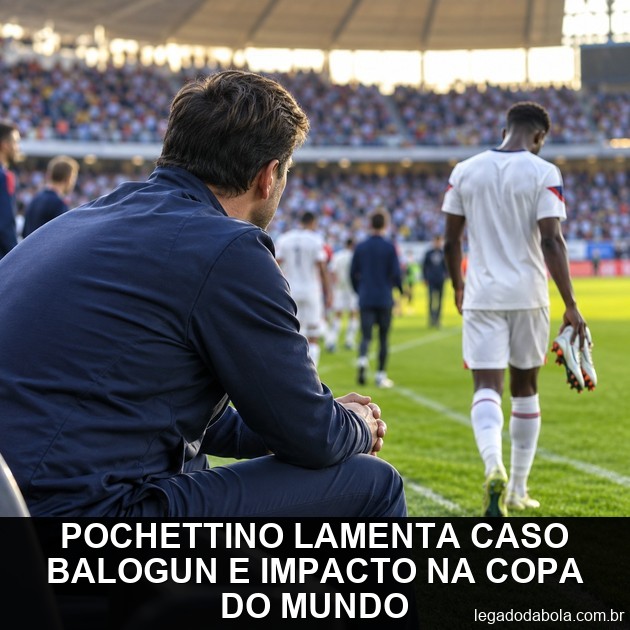
Mauricio Pochettino has once again addressed one of the most delicate episodes of his tenure as head coach of the United States national team. The Argentine coach admitted regret for not being more directly involved in the appeal process against Folarin Balogun's suspension during the World Cup.
The statement stands out because Pochettino is known for delegating responsibilities to his coaching staff. His public acknowledgment of a management failure shows how much weight the episode carried inside the American locker room.
More than a disciplinary matter, the Balogun case became an emotional turning point for the USMNT during the tournament. Understanding this moment helps explain part of the squad's performance in the competition.
Pochettino admitted he should have gotten personally involved in the appeal against Balogun's suspension, instead of leaving the process solely to the legal and technical staff.
What Happened
Folarin Balogun received a red card that resulted in a suspension during the World Cup, leaving the United States without him at a sensitive moment in the competition. The coaching staff attempted to overturn the punishment through a disciplinary appeal.
According to Pochettino, the appeal process did not have his direct involvement as it should have. The coach said he trusted other members of the staff to handle the case, a decision he now recognizes as a mistake.
The appeal did not have the desired outcome, and Balogun served the suspension, missing the squad in decisive matches of the tournament. His absence altered the team's tactical planning.
Impact on the Team/Competition
Losing Balogun to suspension had an immediate effect on the USMNT's attack. The player was a key piece in the offensive system built by Pochettino, and his absence forced last-minute adjustments.
Beyond the tactical impact, Pochettino highlighted that the episode changed the overall energy of the group. A squad seeking cohesion during the World Cup had to deal with the collective frustration generated by the suspension.
This type of emotional wear is often underestimated, but it directly influences performance in short, decisive competitions like a World Cup, where there is no time to rebuild the group's confidence and morale.
A red card off the pitch, in the appeals room, can cost as much as a mistake made during the match.
Reaction from the Football World
Pochettino's statement resonated among analysts of American soccer, who had been discussing the behind-the-scenes squad management during the World Cup for months. The comment reinforces criticism of the national team's legal and disciplinary support structure.
USMNT fans reacted with a mix of understanding and criticism. Many value the coach's transparency in taking responsibility, but also point out that management errors at major tournaments carry a high cost.
Commentators specializing in American soccer also noted that the case exposes a structural weakness: the need for the coaching staff to be more actively involved in disciplinary processes concerning key players.
Relevant History
Pochettino took charge of the USMNT with the mission of preparing the national team for the World Cup cycle, historically one of the most important in the history of American soccer as host of the tournament.
Balogun, born in the United States but developed in the English football system, chose to represent the American national team in a decision that generated international repercussion at the time. Since then, the striker has become a key piece in Pochettino's project.
Balogun's choice to represent the United States instead of England was one of the most talked-about moves in American soccer in recent years, reinforcing the country's investment in attracting dual-nationality talent.
Suspension episodes at World Cups often spark debate about refereeing rigor and coaching staffs' ability to react in time. The Balogun case adds to a list of similar situations experienced by other national teams throughout the tournament's history.
Numbers and Statistics
Although Pochettino did not detail exact figures about the appeal process, the sporting impact of Balogun's suspension was felt in decisive matches during the stage in which the USMNT competed at the World Cup.
The striker was one of the most used names in the offensive system built by the Argentine coach, which makes his absence even more relevant from a tactical standpoint.
Squad management in short tournaments like World Cups is often decided by minimal details, and losing a starter to an avoidable suspension falls into that category of decisive factor.
What Comes Next
With the World Cup over, Pochettino's focus now turns to rebuilding the relationship with the squad and adjusting internal processes, including how the national team handles disciplinary appeals going forward.
Balogun is expected to remain an important piece in the coach's plans for the USMNT's upcoming commitments, especially in continental competitions and preparatory friendlies.
The American federation is expected to review internal protocols to prevent another avoidable suspension from compromising the national team's performance in future competitions.
Expert Opinion
Pochettino's public acknowledgment is rare in national team football, where coaches usually avoid exposing internal management failures. This reinforces how serious the Balogun case was within the group.
When a coach of Pochettino's caliber admits he should have personally gotten involved in a disciplinary appeal, it becomes clear the problem wasn't just legal, it was about leadership. National teams that aspire to compete on equal footing with the world's football powers cannot afford to lose decisive players over avoidable process failures.
The case serves as a lesson for Pochettino himself and for the USMNT's structure. In decisive competitions like a World Cup, every management detail weighs as much as the squad's technical quality on the pitch.