Context and Importance
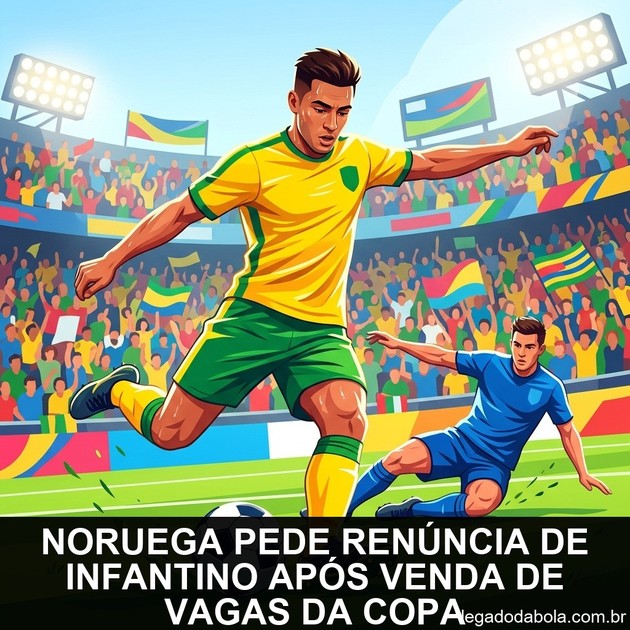
World football has been shaken by another institutional crisis inside FIFA. The Norwegian Football Federation has broken its silence to publicly call for the resignation of president Gianni Infantino.
The reason behind the demand is serious: Infantino is accused of attempting to sell stakes or access tied to World Cup slots, a move that would strike at the core principles of sporting merit. For Norway, this kind of conduct undermines the integrity of the world's biggest tournament.
The significance of this clash goes far beyond internal politics. It touches directly on the future governance of world football and how smaller federations view the concentration of power at the top of FIFA.
If confirmed in detail, an attempt to sell World Cup slots would represent a serious breach of the sporting merit principles that underpin the tournament.
What Happened
According to the original BBC Sport report, the Norwegian Football Federation issued an official statement demanding Infantino's immediate departure. The call follows revelations that the official allegedly sought to negotiate access to World Cup slots.
The response was swift. Mexico and Argentina, two of the most influential federations in Latin American football, publicly defended the FIFA president, creating a clear split among national associations.
This divide exposes a fracture that has been building for some time within world football: on one side, European federations more critical of Infantino's leadership; on the other, countries that maintain a close, supportive relationship with the Swiss-Italian official.
Impact on the Tournament
The epicenter of the controversy is the upcoming World Cup, already under scrutiny for its expanded format and increasingly questioned commercial decisions. Any suspicion of dealing over slots undermines the tournament's credibility.
Nations competing in qualifying campaigns are watching the case closely. If it is proven that sporting criteria can be bent by commercial or political interests, the entire qualification system loses legitimacy.
For FIFA as an institution, the impact is equally severe. The organization has spent years rebuilding its image after the corruption scandals of the Sepp Blatter era, and a new episode like this reopens old wounds.
A World Cup only has value if every slot is earned on the pitch, never negotiated at a table.
Reaction From the Football World
International media reacted with strong caution and demands for clear explanations. European outlets highlighted the seriousness of a demand coming directly from a national federation, something rare in organized football.
Fans and analysts on social media quickly split, mirroring the same polarization seen among federations. Some demanded an independent audit, while others defended Infantino's management for the financial growth FIFA has seen in recent years.
Officials from other confederations have yet to publicly comment, but the episode is expected to dominate the agenda at upcoming meetings and assemblies.
Relevant History
Gianni Infantino took over the FIFA presidency in 2016, right after the crisis that brought down Blatter and several other officials involved in corruption schemes. Since then, he has built a leadership marked by football's commercial expansion.
FIFA has previously faced international investigations into corruption over World Cup host decisions, including the processes that rocked the organization in the 2010s.
Under Infantino, the World Cup was expanded to 48 nations and is set to be hosted across multiple countries simultaneously, as in the upcoming edition. These changes have drawn criticism for prioritizing revenue over sporting tradition.
Norway, for its part, has a history of taking firm ethical stances on football issues, including debates over human rights linked to tournament hosting in recent years.
Numbers and Statistics
While full financial details of the alleged dealing have not yet been revealed, some numbers help illustrate the institutional weight of the case within FIFA.
These numbers show the scale of power concentrated in the FIFA presidency and why any suspicion of misconduct generates immediate global repercussions.
It is worth noting that decisions on World Cup slots and hosting theoretically go through voting processes among member federations, making any hint of a parallel negotiation even more serious.
What Comes Next
The natural next step is FIFA's official response to Norway's demand, which should come with clarifications on the alleged attempt to sell tournament slots.
The issue is likely to be brought to FIFA's next general assembly, where federations worldwide could formally weigh in on whether Infantino should remain in office.
Meanwhile, other European federations, historically more critical of the current leadership, are expected to join Norway's call in the coming days.
Expert Opinion
This kind of institutional crisis is a symptom of a bigger problem: world football has grown só commercially that the line between sporting management and financial interest has become dangerously thin.
When a national federation publicly demands the resignation of the FIFA president, that is not passing noise. It is a sign that trust in world football governance is at stake, and fans deserve clear answers, not institutional silence.
Regardless of the outcome, this case reinforces the need for stricter transparency mechanisms at FIFA. The World Cup belongs to the fans and the nations that earn it on the pitch, never to backroom interests.