Context and Importance
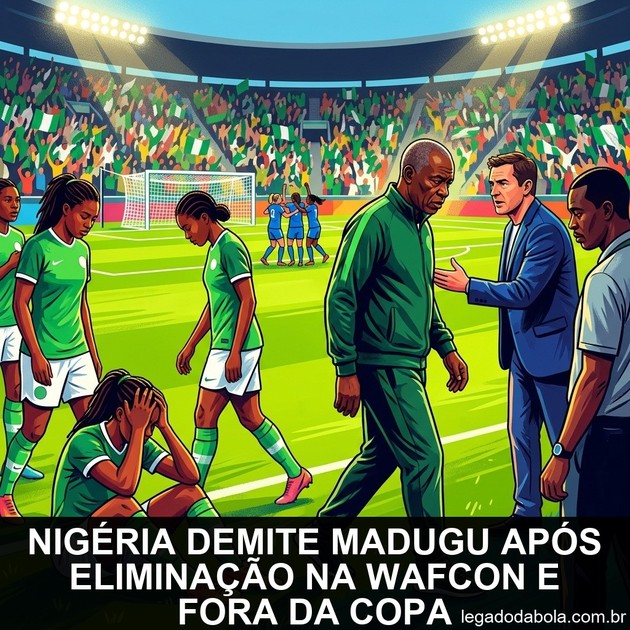
The Nigeria Football Federation (NFF) has decided to end Justine Madugu's cycle in charge of the Super Falcons. The decision comes just days after a result that shocked African football: Nigeria, a historic powerhouse on the continent, missed out on the upcoming Women's World Cup for the first time.
For a country used to dominating African women's football, this elimination breaks a long-standing pattern that is hard to swallow. The Super Falcons are the most decorated team in WAFCON history, which makes missing the World Cup even more painful for fans and officials alike.
Madugu's dismissal, therefore, is not just a knee-jerk reaction. It signals that the NFF sees this moment as a crisis requiring an immediate change of direction, not just technical tweaks.
The NFF confirmed Madugu's departure along with his entire technical staff, effective immediately, with no transition period.
What Happened
Nigeria competed in the WAFCON (Women's Africa Cup of Nations) seeking the result that would secure direct or indirect qualification for the Women's World Cup. The campaign, however, ended earlier than expected, with the elimination sealing Nigeria's absence from the tournament.
Faced with this failure, the NFF did not wait. In a statement, the federation announced the dismissal of Justine Madugu and the entire technical staff that accompanied him, ending the relationship with immediate effect.
This decision follows a common pattern among federations that treat qualification results as a red line. When the ultimate goal, a World Cup spot, slips away, a change in leadership is often the first measure taken.
Impact on the Team/Competition
For the Super Falcons, the immediate impact is the need for rebuilding. A new coach will have to be chosen, and the process of adapting a squad to a new footballing philosophy usually takes time, something the Nigerian team does not currently have in abundance.
The absence from the World Cup also has a direct effect on the visibility and development of women's football in the country. Playing in a World Cup means international exposure, transfer opportunities for players, and renewed sponsor investment.
Additionally, the crisis opens room for a broader reassessment of youth categories and sporting management of the women's game in Nigeria, an area where rival federations on the continent have been investing heavily in recent years.
A historic powerhouse of African women's football will have to watch the World Cup from the outside for the first time.
Reaction from the Football World
The news quickly spread among African football analysts, who point to the elimination as a warning sign for the NFF's sporting planning. Demanding quick answers is common for national teams with a tradition of success.
Nigerian fans, historically demanding of the Super Falcons, are calling not just for the coach's exit, but for a structural review of how the team has been prepared for international competition cycles.
Commentators also highlight that this case reinforces a trend seen across other African federations: growing pressure on women's football, which is gaining increasing media attention and being held to results comparable to men's football.
Relevant History
The Super Falcons built a status of continental dominance over the decades, consistently accumulating WAFCON titles. That track record of success is exactly what makes the current elimination so impactful.
Nigeria had always been a constant presence at Women's World Cups since the competition began, making the current absence an unprecedented event.
Justine Madugu had taken over during a transitional period, tasked with maintaining the team's competitive legacy. The WAFCON result, however, ended his tenure earlier than many expected.
Immediate dismissals following qualifying failures are not uncommon in international football, but they carry extra weight when they involve historically dominant national teams, as is the case with Nigeria in African women's football.
Numbers and Statistics
The Super Falcons' WAFCON history is marked by an impressive number of titles won over the years, which underscores the magnitude of the current setback.
These numbers help illustrate the seriousness of the situation for the Nigerian federation, which now needs to rebuild a technical project practically from scratch.
What Comes Next
The natural next step for the NFF is to begin the search for a new head coach for the Super Falcons. The choice will carry symbolic weight, as the new name will need to restore fan confidence and rebuild the team's competitiveness.
Beyond naming a new coach, the federation faces the challenge of reorganizing its sporting plans for upcoming WAFCON and qualifying cycles, aiming to avoid another absence from international tournaments.
The African women's football calendar remains intense, and Nigeria will need quick answers to avoid losing further ground to rival nations that have been growing on the continent.
Expert Opinion
Madugu's immediate dismissal shows that the NFF treats the World Cup absence as an institutional crisis, not just a bad seasonal result. That is understandable given the Super Falcons' history of success.
Changing the coach addresses the symptom, but the underlying problem may lie in how Nigeria has been planning women's football long-term. Without structural investment, the next name in charge risks facing the same fate.
This case should serve as a warning for other federations on the continent: maintaining a tradition of titles does not guarantee an automatic World Cup spot, and the competitive gap in women's football worldwide is shrinking fast.