Context and Importance
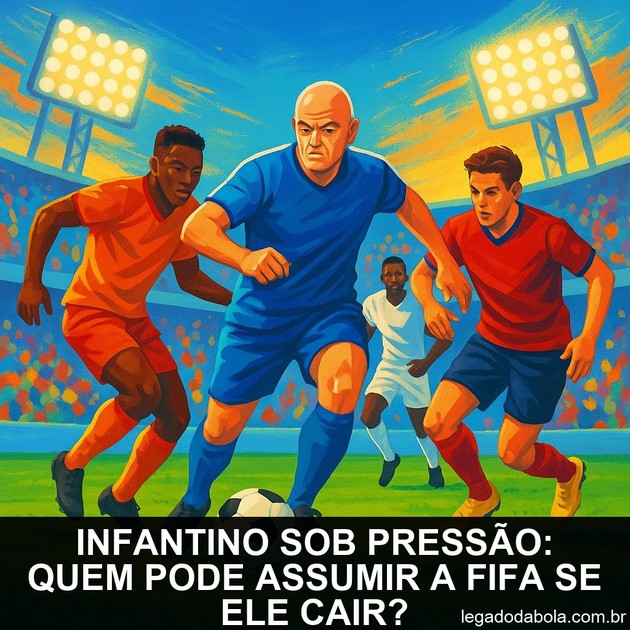
Gianni Infantino is going through one of the most delicate moments of his tenure at the head of FIFA. The president backed away from an attempt to sell stakes linked to the World Cup, a decision that exposed internal cracks in the organization and revived questions about his leadership.
This episode is not an isolated event. For some time, critics have pointed to a concentration of power in Infantino's hands and a lack of transparency in financial decisions involving FIFA's main asset: the World Cup.
Understanding this moment matters because FIFA is not just a sports body. It moves billions of dollars, defines the world football calendar, and directly influences clubs, national teams and fans across every continent.
Infantino backed away from a plan to sell stakes linked to the World Cup after strong internal resistance, shaking his image as an unquestioned leader.
What Happened
According to reporting from BBC Sport, Infantino had drawn up a plan to sell stakes tied to the World Cup, a move seen by part of the board as risky and lacking transparency.
Faced with a negative reaction, the president chose to shelve the project before the proposal formally advanced. The withdrawal, however, did not end the crisis, it instead exposed discomfort that had been building inside the organization.
Sources close to international football describe a scenario of political wear, with executive committee members increasingly willing to challenge decisions made without broad consultation.
This kind of move, proposing something and then backing down under pressure, is seen by analysts as a sign of weakness in a structure that has, for years, operated in a centralized way around Infantino's figure.
Impact on Clubs, National Teams and Competitions
A possible departure of Infantino would have a direct effect on the planning of the World Cup and other competitions organized by FIFA, including the international calendar that affects national teams and clubs.
Commercial contracts, sponsorship deals and broadcast rights negotiations tend to go through review during any power transition at the organization, generating uncertainty for national federations.
National teams that rely on resources distributed by FIFA, such as Brazil and much of South America and Africa, are closely following any instability at the top of the organization.
A leadership change could also reopen debates about the expansion of competition formats, a theme Infantino strongly defended in recent years and which faces resistance from traditional leagues and federations.
Reaction from the Football World
News of Infantino's retreat generated immediate repercussions among executives and sports commentators, who see the episode as a weakening of the president's authority within FIFA itself.
European federations, historically more critical of Infantino's management, are likely to use this moment to push for greater involvement in the organization's strategic decisions.
Meanwhile, federations that benefited from investment and competition expansion under his leadership are expected to defend continuity, fearing instability close to major events on the calendar.
FIFA is made up of more than 200 national federations, which makes any decision about leadership a complex political process full of distinct regional interests.
Relevant History
Infantino took over the FIFA presidency in 2016, following the departure of Joseph Blatter amid one of the biggest corruption scandals in world football history.
Since then, he has pushed significant changes, such as expanding the number of national teams at the World Cup and creating a new format for the Club World Cup, decisions that divided opinion within the football community.
Over the years, Infantino has also been criticized for controversial political alignments and for decisions made with little consultation from member federations, a pattern that resurfaces in the current crisis.
This history of centralized power helps explain why the recent retreat was read as a sign of weakness rather than just a tactical adjustment.
Infantino arrived promising to break with Joseph Blatter's legacy of opacity. Years later, part of the criticism he faces today echoes similar accusations of lacking transparency.
Numbers and Statistics
FIFA currently brings together more than 200 affiliated national federations, making it one of the broadest and most powerful sports organizations on the planet.
Infantino is in his third term at the head of the organization, having been re-elected by a wide margin in previous processes, which reinforces the contrast with the current crisis.
The World Cup remains FIFA's largest source of revenue, responsible for the vast majority of the organization's earnings in four-year cycles.
What Comes Next
In the coming months, FIFA's executive committee is expected to debate the presidency's future more intensely, especially with major commitments approaching on the international calendar.
Should the pressure for change intensify, influential federations could begin quietly articulating alternative names for a possible succession, a process that usually happens discreetly before becoming public.
Until then, Infantino is expected to try to rebuild internal support, avoiding new controversial proposals that could reignite recent friction with executives and federations.
The outcome of this crisis will directly weigh on how FIFA organizes itself ahead of upcoming major tournaments, including planning for future World Cup editions.
Expert Opinion
Infantino's retreat should not be read as an isolated act of caution. It exposes accumulated wear, the result of years of decisions made with little openness to internal debate.
Any power structure that is excessively centralized tends to crack when confronted with coordinated resistance, and that is exactly what was seen in this episode.
When a president publicly backs away from his own plan, the signal sent is not caution, it is political fragility. FIFA enters a period of watchfulness, and any new misstep by Infantino could accelerate the succession debate.
For the average fan, what matters is the stability of the World Cup as the sport's biggest event. That is precisely the stability that comes into question when the leadership of the organization responsible for it enters a crisis.
An unstable FIFA leadership is a silent threat to the planning of world football in the years ahead.