Context and Importance
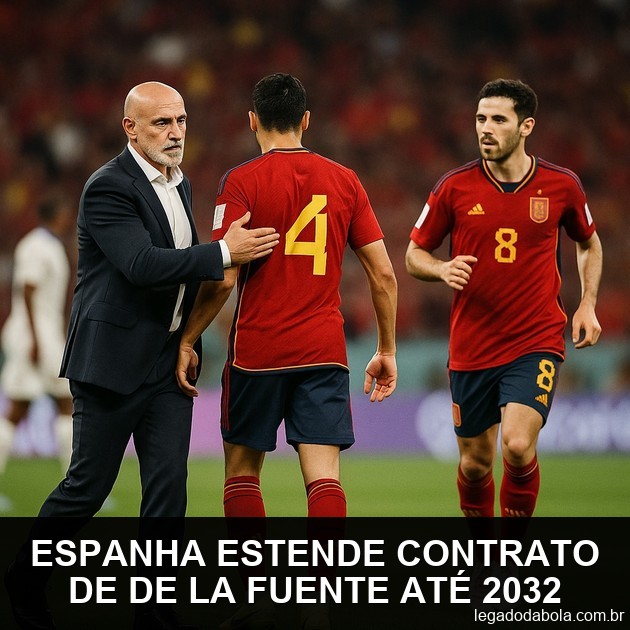
This news arrives at a rare moment in international football: a coach being locked in by his federation right after the biggest triumph of his career. The Royal Spanish Football Federation (RFEF) has decided to extend Luis de la Fuente's contract until 2032, an unusually long-term deal for an international manager.
The announcement reinforces the federation's confidence in the technical project built over recent years. After winning the Euros and now the World Cup this summer, De la Fuente has become almost synonymous with success for Spain.
This extension also signals long-term planning. Instead of negotiating short renewals every cycle, the RFEF opted for a contract spanning multiple competitions, giving institutional stability to a project that is clearly working.
De la Fuente's new deal with Spain runs until 2032, one of the longest contracts ever signed by a national team coach in Europe.
What Happened
The RFEF confirmed the contract extension shortly after celebrations ended for Spain's World Cup title, won this summer. The decision was made by the federation's leadership as immediate recognition of the coach's work.
De la Fuente took over the Spanish national team during a transition period, following Luis Enrique's departure, and quickly built his own identity for the squad. The winning cycle began with the Euro triumph and culminated now in the World Cup title.
With the new contract, the manager will remain in charge of La Roja for a period that, in theory, covers at least two more World Cups and multiple European Championships, something rarely seen in national team football.
Impact on the National Team and Competition
For Spain, keeping De la Fuente represents tactical and institutional continuity. Changing technical leadership after a winning cycle often creates identity disruptions, and the federation chose to avoid that risk.
The coach will have freedom to plan squad renewal over the medium and long term, essential during a generational transition for the Spanish national team, which blends experienced players with a talented new generation.
The stability also strengthens Spain's position against other football powers, which constantly change coaches after disappointing results. Having a consolidated long-term project is a real competitive advantage.
A contract until 2032 isn't just about confidence in the present. It's an explicit bet on what Spain can build over the coming cycles.
Reaction from the Football World
The extension was received positively by Spanish analysts and fans, who see it as fair recognition of the coach's work. The general feeling is that the federation made the right call by not tampering with a winning formula.
In the international press, the move also drew attention for its unusually long duration. Compared to other national team coaches, who typically have deals lasting two to four years, De la Fuente's agreement stands out for its boldness.
Former players and Spanish commentators noted that the project's continuity should directly benefit young players coming through the ranks, who now know exactly what style of play is expected when wearing the national team shirt.
Relevant History
De la Fuente built his career within Spain's youth national teams before taking charge of the senior side. That internal experience was key to shaping a consistent playing style across different age groups within La Roja.
Before leading the senior national team, De la Fuente had already worked with Spain's youth categories, which helped maintain a clear tactical identity across generations.
Spain has a tradition of valuing ball possession and short passing, a legacy dating back to the Vicente del Bosque and Luis Aragonés eras. De la Fuente continued this philosophy, adapting it to a more modern and vertical style of football.
The cycle he started coincided with the rise of a new generation of Spanish talent, which joined the already consolidated base of the squad to form the World Cup-winning team.
Numbers and Statistics
Spain's recent numbers under De la Fuente help explain the federation's confidence in the contract extension. The team's performance rate in recent official competitions was a decisive factor in the decision.
Beyond the titles, De la Fuente's cycle stood out for consistent results in decisive matches, a factor that often weighs more heavily than isolated statistics in a federation's evaluation.
What Comes Next
With the contract signed until 2032, De la Fuente is set to lead Spain through at least two more World Cups and several European Championships, plus all the qualifying cycles in between.
The next big challenge will be managing the squad's natural transition, integrating young prospects without abandoning the core that won the World Cup title. That balance will be tested already in the upcoming qualifiers.
The federation will also closely monitor the team's performance in intermediate competitions, such as the Nations League, which serve as a barometer for whether the long-term project remains on the right track.
Expert Opinion
The RFEF's decision to extend the contract until 2032 is more than a symbolic gesture. It's a statement that Spain is betting on continuity as its central strategy to maintain its dominance in world football.
Long-term contracts in national teams only work when there are results and a consolidated playing identity. De la Fuente delivered both, and Spain made the right call by not risking an unnecessary rupture.
The risk, of course, is complacency. Historically, very long winning cycles can lead to stale messaging and difficulty in renewal. It will be up to De la Fuente to prove that Spain can reinvent itself within its own winning project.