Context and Importance
Spanish women's football is going through a moment of consolidation rarely seen in any national team, men's or women's. Winning the U20 World Cup in Poland is not an isolated event, but confirmation of a development project that has been producing results for years.
The decisive match against North Korea, holders of the previous title in the category, carried special symbolic weight. Beating the reigning Champions in a final is the toughest proof that a youth development system is truly working.
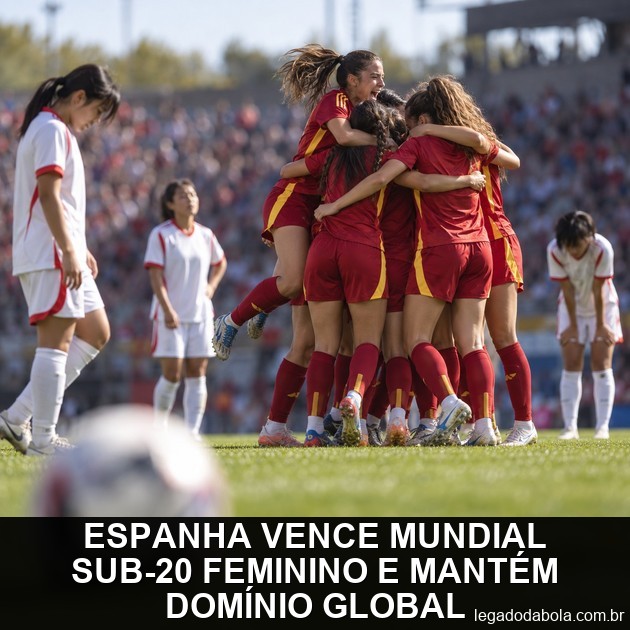
Spain overcame defending Champions North Korea to lift the U20 Women's World Cup trophy in Poland.
This result also serves as a barometer for global women's football. When a national team repeats excellent performances across different youth categories, it signals a structured system, not just isolated talents appearing by chance.
What Happened
The U20 Women's World Cup final was played in Poland on Sunday, with Spain defeating North Korea to win the tournament title. The match crowned a solid campaign by the Spanish side throughout the competition.
North Korea entered the final as defending Champions from the previous edition, making Spain's task even harder. Asian sides, especially North Korea, are known for tactical discipline and the difficulties they impose on opponents.
Despite Spain's relative recent favoritism, facing the reigning Champions in a final requires emotional control and the ability to execute under pressure. The team managed these factors well throughout the match.
Beating the reigning Champions in a world final is the hardest way to win a title.
Impact on the Team and Competition
For the Spanish Football Federation, the U20 women's title adds to a growing collection of achievements in youth categories, reinforcing Spain as one of the global references in developing players.
The result also directly impacts the competitive landscape of U20 women's football. North Korea, who arrived as defending Champions, loses its momentary dominance but shows its youth system remains competitive at world level despite the final defeat.
For women's football as a whole, seeing two national teams from different continents contest a high-level final reinforces the globalization of the sport at youth level, something that has not always been the reality in women's youth competitions.
Reaction from the Football World
The title was seen as another chapter in a trajectory already closely followed by Spanish fans and media. Success in women's youth categories has been treated as a natural extension of the work Spain has been doing in senior women's football.
On the North Korean side, expectations were to defend the previously won title, and reaction around the team centered on the resilience shown even in defeat, keeping the country as a relevant force in the category.
Overall, the global women's football community received the result as reinforcement of a trend: countries with consistent investment in development are winning titles recurrently, not sporadically.
Relevant History
Spain has already accumulated relevant achievements in different categories of women's football in recent years, consolidating a cycle of success in national team competitions.
Spain's growth in women's football did not start now. In recent years, the country has invested heavily in structure, youth competitions, and a playing model that prioritizes ball possession and technical development from younger categories.
North Korea, in turn, has a tradition of surprising in the women's youth scene, often with more defensively organized football, but extremely competitive, which explains why the team arrived at the final as defending Champions.
This clash between a European technical development model and a more pragmatic Asian model reflects two distinct schools that have each, in their own way, produced standout results in women's youth football.
Numbers and Statistics
Detailed goal statistics from the final are still being consolidated by official competition channels, but the overall result confirms Spanish superiority in the decider.
What is clear is the pattern: Spain keeps repeating strong campaigns in women's youth national team tournaments, reinforcing the reading that there is a system, not just an isolated talented group.
This kind of consistency is rare in youth football, where generations of players usually vary greatly in quality between tournament editions.
What Comes Next
For the champion Spanish players, the natural next step is the transition to higher categories, with expectations that part of the group will join the senior or U23 national team in upcoming cycles.
The Spanish Federation tends to maintain investment in the model that has been producing results, with continuity in youth categories and close monitoring of the players revealed in this World Cup edition.
North Korea will need to reassess its preparation aiming to reclaim the title in the next edition, keeping the country as one of the protagonists to watch in upcoming women's youth competitions.
Expert Opinion
When a national team wins youth tournaments recurrently, it is not luck, it is method. Spain is doing in women's development categories what it did for years in men's football: building a playing identity that repeats from U17 to the senior team.
The most interesting part of this title is the opponent beaten in the final. Overcoming the reigning world Champions in the category requires more than individual talent, it requires tactical planning and emotional coolness, virtues that usually take years to develop in such young athletes.
The warning for world women's football is clear: countries that still treat women's development as a secondary project risk falling further behind teams like Spain, which is already reaping the rewards of continuous, structured investment.