Context and importance
The 2026 World Cup marks a turning point in the history of national team competitions. For the first time, the tournament gathered 48 national teams, a major jump from the traditional 32-team format used since 1998.
FIFA's decision to expand the tournament aimed to give more representation to confederations that historically had few slots, such as CAF (Africa) and AFC (Asia). This completely changed the design of the group stage.
Understanding this new format is essential to grasp what happened on the field. A bigger World Cup means more matches, more debutant teams, and consequently, a group stage with its own dynamic, unlike any previous edition.
Since 1998, when the tournament grew from 24 to 32 teams, no structural change had been as deep as the 2026 expansion to 48 teams.
What happened
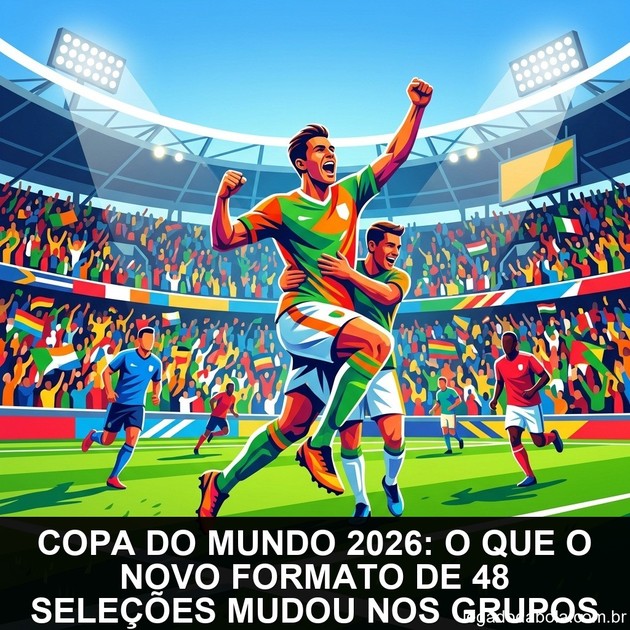
The 2026 World Cup was jointly hosted by the United States, Mexico and Canada, the first edition in history hosted by three countries simultaneously. The group format moved to 12 groups of 4 teams each, instead of the traditional 8 groups.
This reform brought an important novelty: besides the top two teams from each group, the eight best third-placed teams also advanced to the knockout stage, expanding the bracket to 32 teams.
The group stage schedule stretched over more days than in previous World Cups, giving fans a longer period of daily matches and multiple simultaneous games, increasing the festive feeling spread across the three host countries.
Impact on the competition
The new format changed the strategic calculations of national teams. With the chance to advance even in third place, coaches began building more cautious strategies in some matches, avoiding unnecessary risks against stronger opponents.
Teams from less traditional confederations, which gained extra slots with the expansion, had the chance to gain group stage experience against historic powerhouses, something unlikely to happen under the old 32-team format.
For title favorites, the challenge was different: the group stage became longer with more total matches in the tournament, requiring even more careful physical and squad management toward the decisive phases.
For the first time in history, a World Cup gathered 48 national teams and was hosted by three countries at once.
Reaction from the football world
The tournament's expansion split opinions among fans and experts even before a ball was kicked. Part of the specialized criticism questioned whether increasing the number of teams could dilute the average technical level of the group stage.
On the other hand, fans from countries that rarely qualify for World Cups welcomed the change enthusiastically, since the expanded slots increased their teams' chances of taking part in the biggest event in world football.
Commentators also highlighted the unprecedented logistics of a tournament held in three countries, assessing the challenge of organization, team travel and fan adaptation to the different host cities spread across North America.
This is the first World Cup in history organized by three host countries at the same time: the United States, Mexico and Canada.
Relevant history
The 32-team format ran for seven consecutive editions, from 1998 to 2022, the longest-running format in the modern history of the tournament. Before that, the World Cup had 24 teams between 1982 and 1994, and 16 teams in earlier decades.
The idea of expanding to 48 teams was approved by FIFA back in 2017, with the stated goal of further globalizing football and opening space for emerging nations on the international stage.
Mexico, in fact, became the first country to host three World Cups, adding the 1970 and 1986 editions to its participation in 2026, a historic feat within the competition itself.
Numbers and statistics
The format expansion brought unprecedented numbers to the competition, both in the number of matches and participating teams, something never seen in the previous 21 editions of the tournament.
The total number of group stage matches grew proportionally to the increase in teams, resulting in a longer World Cup with more consecutive match days than any previous edition.
These numbers reinforce the scale of the structural change promoted by FIFA and help explain why the 2026 group stage will have its own chapter in World Cup history.
What comes next
With the group stage over, the tournament moves to the round of 16, now contested by 32 teams, a number equal to the total participants of the old full format.
This setup creates a longer knockout stage than traditional ones, with an extra elimination round compared to previous World Cups, increasing the total number of decisive matches toward the grand final.
Fans should closely follow how the teams that advanced in third place perform against opponents that finished the group stage in first, a clash of distinct contexts within the new format.
Expert opinion
The World Cup's new format is, above all, a bold FIFA bet on balancing competitiveness with global representation. It is natural that this generates debate between those who prioritize technical level and those who value the inclusion of more nations.
In practice, a larger group stage tends to produce more transitional matches, with favorites managing their strength and smaller teams seeking punctual surprises, a different tactical scenario than what was seen with 32 teams.
Bigger formats do not diminish the World Cup's charm, they just shift where the drama happens. Instead of direct eliminations early in the group stage, fans gained more days of celebration and more national teams dreaming until the very last round.