Context and Importance
The Ballon d'Or is football's most coveted individual award. It was created in 1956 by France Football magazine and became a symbol of status.
The problem is old: the award does not always reflect what happened on the pitch during the season. Fans have short memories, and the glow of a big tournament often speaks louder.
In 2026 the debate gains strength. The World Cup was played mid-year, and the question is whether a tournament this short should count for more than ten months of club work.
The Trivela article behind this analysis argues that the World Cup creates real distortions when choosing the best player in the world.
What Happened
Trivela published a list of the biggest injustices in the recent history of the Ballon d'Or. The central thesis is that the award often strays from what the pitch actually showed.
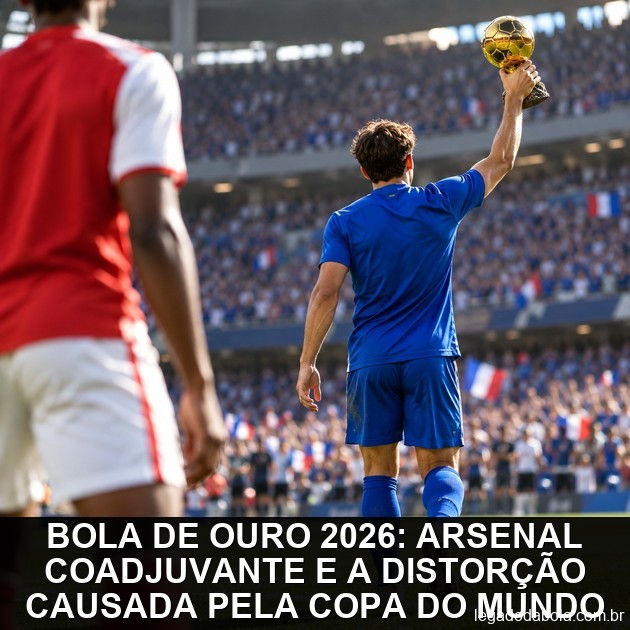
One point raised is the role of Arsenal, who appear as supporting actors in the debate. The idea is that a strong club season can fall into the background next to the weight of a World Cup.
In 2026 the World Cup was held in three countries: the United States, Canada and Mexico. It was the first edition with 48 teams, which widened the tournament's reach and narrative weight.
Impact on the Club, the National Team and the Competition
For clubs, the effect is direct. Players who carry a team for nine or ten months can lose ground to those who shine for a few weeks in a national team shirt.
This changes the logic of the award. Instead of measuring consistency, it starts to measure momentum. A decisive player in a knockout match can beat someone who was steady all season.
For Arsenal and other top clubs, the message is uncomfortable: a whole season of collective work may earn few votes if the World Cup steals the spotlight.
One month of World Cup should not count for more than a whole season, but often it does.
Reaction from the Football World
The debate about the World Cup's weight in the Ballon d'Or is recurring. Journalists, fans and former players tend to split with every edition.
On one side are those who say the World Cup is the sport's biggest stage and should weigh heavily. On the other are those who argue that the club season has more games, more opponents and more consistency.
On social media the argument repeats: fans of clubs that had great campaigns complain about seeing their idols overshadowed by the international calendar.
Relevant History
The most remembered case is 2010. Dutch midfielder Wesley Sneijder won the treble with Inter Milan and reached the World Cup final, yet finished outside the award's podium.
In 2018, Croatia's Luka Modric won after leading his country to the World Cup final and winning the Champions League with Real Madrid. There, World Cup and club moved together.
In 2022 the World Cup was played in November and December, outside the voting window. The award looked at the previous season, and the winner was Karim Benzema.
The relationship between the World Cup and the Ballon d'Or was never linear. Some years the World Cup decided everything, and in others it barely mattered.
Numbers and Statistics
The numbers help explain the distortion. With 48 teams, the 2026 World Cup had 104 matches in total.
Even só, the champion plays only eight games: three in the group stage and five more in the knockouts, including the final. That is a small sample compared with a club season.
A top player can feature in well over 50 matches a season across league, cups and continental competitions. The comparison makes the contrast clear.
The Ballon d'Or was created in 1956 and the first winner was Englishman Stanley Matthews.
What Comes Next
The debate does not end with the ceremony. With each new edition, the discussion about the weight of national teams returns, especially in World Cup and European Championship years.
The expectation is that the organizers will keep adjusting criteria and voting windows to balance clubs and national teams. Any change, however, tends to spark new controversy.
For fans, what remains is to follow the list of finalists and see how much the World Cup really counted in the final decision and who was left out.
Expert Opinion
The mistake is not in valuing the World Cup. It is the sport's biggest stage and deserves weight. The mistake is letting it count for everything, as if ten months of work fit into eight games.
A good individual award should balance consistency, titles and decisive moments. When only one of those factors rules, injustice appears.
The Ballon d'Or should reward the best player of the year, not just the best player of the last month. When the World Cup becomes the only criterion, club football loses its voice.