
Context and Importance
The 2026 World Cup will be unlike anything football has seen before. For the first time in history, the tournament will be hosted across three countries simultaneously: the United States, Canada, and Mexico. This geographic spread creates a massive challenge for European fans - the time zone difference. For English supporters, some of their national team's games could kick off in the middle of the night.
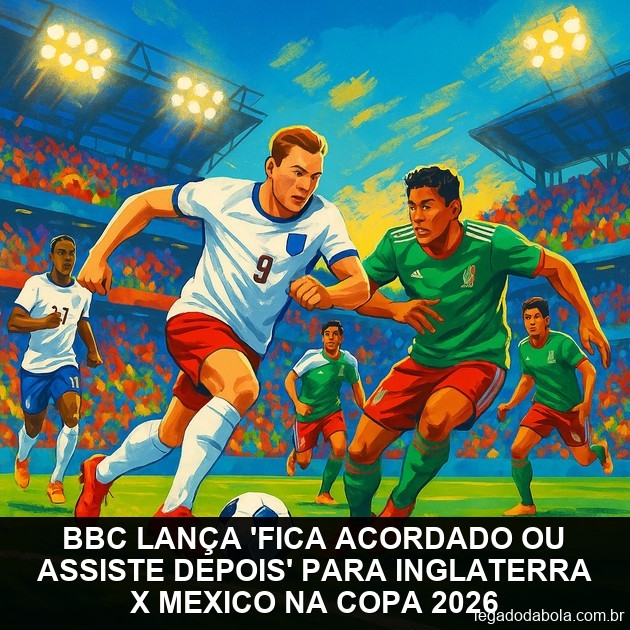
That is exactly why the BBC, the British public broadcaster with World Cup transmission rights, announced an initiative called 'Stay Up or Catch Up'. The idea is simple: the fan chooses. Either watch live, even late at night, or watch later on BBC iPlayer without spoilers ruining the experience.
For the world of football, this signals new times. Sports broadcasting must reinvent itself to compete with social media and streaming platforms where results appear within seconds. The BBC is leading the way with a creative solution to a real problem.
The time zone difference between the UK and Mexico can reach 7 hours in European summer, meaning games could kick off after midnight in London.
What Happened
The BBC announced it will structure its coverage of the England vs Mexico match at the 2026 World Cup around this dual offer. Fans who want to experience the live emotion will have the full broadcast at whatever local time the game takes place. Those who prefer to sleep can watch later on BBC iPlayer, the broadcaster's streaming service, available to all UK residents.
The broadcaster acknowledges that asking an English fan to stay awake until the early hours on a weekday is no small ask. The 'Stay Up or Catch Up' proposal works as a guarantee: no supporter will miss the England national team game because of the time. iPlayer is already widely used in the UK and supports both live and on-demand broadcasts.
The announcement also stands out for its tone. The BBC is not merely informing viewers of the kick-off time. It is openly acknowledging that the time zone is a problem and offering a practical solution. This reflects an important shift in how traditional broadcasters communicate with audiences in the streaming era.
Mexico is one of the three host countries of the 2026 World Cup, making the England vs Mexico clash even more symbolic - a visitor taking on a host on home soil.
Impact on the Competition
For the England national team, the match against Mexico carries extra weight. Beyond the sporting value of any World Cup game, facing a host nation on their own territory is an additional challenge. Mexico historically commands massive support in their stadiums and the home crowd will be a genuine factor on the pitch.
From a competition standpoint, the 2026 World Cup with 48 teams was already designed to be the largest in history. The expanded format means more games, more kick-off times spread throughout the day, and inevitably more time zone conflicts for fans across different continents. The challenge the BBC identified for English fans is the same one European supporters of all nations will face.
For broadcasters, this is a real test. Those who offer the best viewing experience, whether live or on demand, will win fan loyalty. The BBC is positioning iPlayer as an essential part of high-level sports coverage, not just a secondary alternative.
The 2026 World Cup in North America will transform the football viewing experience for millions of Europeans. The time zone is the new battleground for broadcasters.
Reaction from the Football World
The BBC's initiative was well received among fans and sports media specialists. The pragmatic approach of simply giving the fan options, without drama, was praised as an example of how traditional broadcasters can compete with digital platforms without losing their identity.
On British social media, the debate is already lively: is it worth staying up to watch live, with that raw emotion of not knowing the result? Or is it better to sleep well and watch in the morning with coffee? It is a genuine debate reflecting how fans' relationship with live football is changing.
In the broader context of world football, the news also reignited debate about kick-off times at World Cups hosted in countries with distant time zones. The 2022 edition in Qatar had games at relatively favorable times for Europe. The 2026 edition in North America inverts that logic, favoring the American market at the expense of European viewers.
The debate over World Cup kick-off times reveals a real tension: FIFA must balance the commercial interests of the American and European markets, which operate in opposing time zones.
Historical Context
The time zone issue at World Cups is nothing new. In 2002, when the tournament was held in Japan and South Korea, European fans had to wake up in the middle of the night or early morning to watch games. England itself played at unusual hours for their own supporters in that edition.
The 2014 World Cup in Brazil was a paradise for Europeans in terms of timing. With Brazil 3 to 5 hours behind Europe, most games took place in the early afternoon European time, perfect for workers watching in offices or bars. That convenience helped make 2014 one of the most-watched World Cups in history.
Mexico has a rich history with England in World Cups. The atmosphere of a 2026 clash is particularly charged given that Mexico will be playing as a host nation, with passionate home support filling the stadiums.
In 2002 in Japan and Korea, European fans woke up at 3 or 4am to see their teams play. BBC iPlayer did not even exist then - the service was only launched in 2007.
Numbers and Statistics
To understand the scale of the time zone challenge, look at the numbers. The difference between London (BST, UTC+1 in European summer) and Mexico City (UTC-6) reaches 7 hours. A game kicking off at 4pm local Mexican time will be midnight in London.
The 2026 World Cup will feature 48 teams for the first time in history, playing 104 games in total. With matches spread across three countries and several time zones within the US alone, the schedule will be the most complex ever assembled for a World Cup. For European broadcasters, this concentrates decades worth of logistical challenges into a single tournament.
BBC iPlayer is one of the world's largest public streaming services, with tens of millions of registered users in the UK. The platform has already broadcast major live sporting events with great success. For the 2026 World Cup, iPlayer will be central to the broadcaster's strategy.
What Comes Next
With the 2026 World Cup approaching, broadcasters worldwide are finalizing their transmission strategies. For the BBC, the 'Stay Up or Catch Up' initiative is just the beginning of what promises to be the most elaborate coverage in the broadcaster's history in terms of integration between linear TV and streaming.
For the England national team, the game against Mexico represents a character test. Playing on the host nation's territory, with a hostile crowd, in a time slot that makes it difficult for their own fans to attend in large numbers requires maximum focus.
For world football more broadly, the 2026 World Cup is already being built as an event that will redefine the size and complexity of future tournaments. What the BBC is doing with the time zone is a symptom of something larger: future World Cups will demand creative solutions from everyone involved, from broadcasters to federations, from fans to players.
Expert Opinion
The BBC's decision to officially name a broadcast experience around time zones is not just marketing. It is an honest acknowledgment that the 2026 World Cup will create a different kind of fan in the UK: one who watches the game 12 hours later, being extra careful to avoid social media spoilers.
What the BBC did was turn a problem into a product. The time zone has always been a passive obstacle - now it has become a selling point. 'Stay Up or Catch Up' is almost philosophical: it captures the tension between the raw emotion of watching live and the comfort of on-demand viewing that defines how we consume sport today. It signals that major broadcasters no longer just want to broadcast - they want to curate the entire fan experience. For football, that is a welcome evolution.