Context and Importance
Some scorelines are just scorelines. Others carry ghosts. The 3-3 draw between Algeria and Austria at the 2026 World Cup belongs to the second group. On Sunday, June 28, the two nations met again, and with them came a 44-year-old story.
The reason is easy to explain and hard to forget. In 1982, in Spain, Algeria and Austria stood at the center of one of the most shameful episodes in World Cup history. That is why any match between them is born with extra weight. It is not just football. It is collective memory.
This time the draw was full of goals and emotion. But the question that took over social media and the press was not about tactics. It was about intention. Was this a fixed result? Or just the natural chaos of an open game? That doubt is what makes the match só relevant.
What Happened
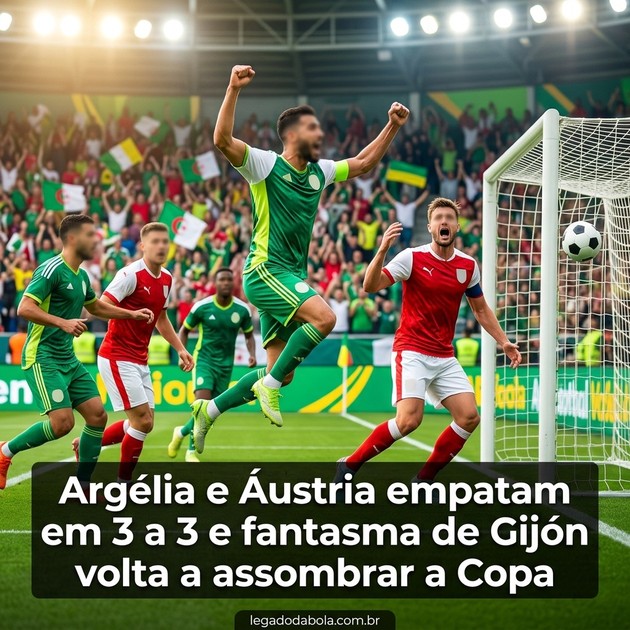
Algeria and Austria played a lively match and finished level at 3-3. A six-goal game rarely goes unnoticed at a World Cup, and this was no exception. The big scoreline put both nations in the spotlight.
The sensitive point was not the number of goals, but the context. When two teams with such a loaded past meet and the result seems to suit both, suspicion appears on its own. The word conspiracy started circulating before the final whistle.
Both sides, according to the reaction, defended the draw as something natural. For them it was a genuinely contested game, with mistakes, comebacks and real emotion. The term unexpected became the center of the debate. Unexpected for those who watched, but suspicious for those who remember 1982.
Impact on Teams and Competition
A 3-3 draw directly affects the group stage maths. Shared points can help or hurt, depending on how the rest of the group behaves. Só every goal conceded and scored weighs on the final standings.
For Algeria, picking up a point away in an open game has value. The African side knows it needs every point to dream of the knockout rounds. A lively draw keeps hope alive, even if it leaves the feeling that it could have been more.
For Austria, the logic is similar. At World Cups, balance in the table usually counts for more than beauty. The draw keeps the team competitive in the race for qualification, even with a defense exposed on the day. In the end, both walk away with something and nothing settled.
Reaction from the Football World
The reaction was immediate and divided. On one side, fans who saw only a crazy, fun match, the kind the World Cup needs. On the other, suspicious voices who saw in the scoreline an echo of the past. The memory of Gijon gives no one peace.
The international press, with BBC Sport leading, turned the doubt into a headline. Conspiracy or chaos? That was the question guiding the coverage. Both sides defended the result as legitimate, which only increased interest in the story.
Online, the topic produced memes, irony and also more serious analysis. Many recalled that Algeria was the great victim of 1982, which makes the irony even greater now. It is hard to accuse the very team that suffered the historic blow decades ago. The debate, however, remains open.
Relevant History
To understand the scale of this, we must go back to 1982. At the World Cup in Spain, in Gijon, West Germany and Austria played a match known as the Disgrace of Gijon. The result suited both and qualified them, eliminating Algeria.
Algeria had stunned mighty West Germany days earlier. But in the final round, the Germans and Austrians played listless football after the opening goal, with no intention of changing the score. The 1-0 secured both and left the Africans out.
The episode was só scandalous that it changed the rules forever. From then on, FIFA ruled that the final group stage games must be played at the same time. The goal was simple: to stop teams knowing exactly what they needed in order to fix results. Gijon became a synonym for a hard lesson.
Numbers and Statistics
The central scoreline of the recent story is clear: 3-3, six goals in a single 2026 World Cup match. A total that places the game among the most eventful of the group stage.
The number that gives weight to the fixture, however, comes from the calendar. There are 44 years between the 2026 draw and the ghost of 1982. Almost half a century of a rivalry defined not by trophies, but by a shared trauma.
It is worth recalling the 1982 fact that still stings: Algeria beat West Germany in their opener, a rare feat for an African side at the time, and were still knocked out in the first round. That injustice triggered the rule change. The numbers here tell a story of football and ethics.
What Comes Next
The draw leaves everything open in the group. Algeria and Austria still depend on themselves, but with little margin for error in the coming rounds. At World Cups, one more slip is often fatal.
The pressure now shifts. A team that drew 3-3 knows it must fix the defense before the next challenge. Conceding three goals at a World Cup is an alarm no coach ignores. The next match becomes a test of response.
Off the pitch, the debate about the result should continue for a while. As long as the topic makes headlines, the ghost of Gijon keeps lurking. Only performance on the field, from here on, can silence the suspicions.
Expert Opinion
In my reading, calling this 3-3 a conspiracy is an exaggeration driven by memory. A game with six goals is, by nature, chaotic. Defenses fail, attacks grow, and the score rises. Fixed results rarely produce an attacking party like this.
What exists here is symbolic weight. Algeria carries the wound of 1982 like few teams carry anything in football. That is why any game against Austria will be read through that lens, fair or not. The past never fully lets go of those who were betrayed.
For football, that is actually healthy. It keeps alive the memory of a time when ethics had to be protected by rule. May the 2026 draw serve as a reminder: the game is only worth it when everyone plays for real. The rest is history, and this time, history seems to be on the right side.