Context and Importance
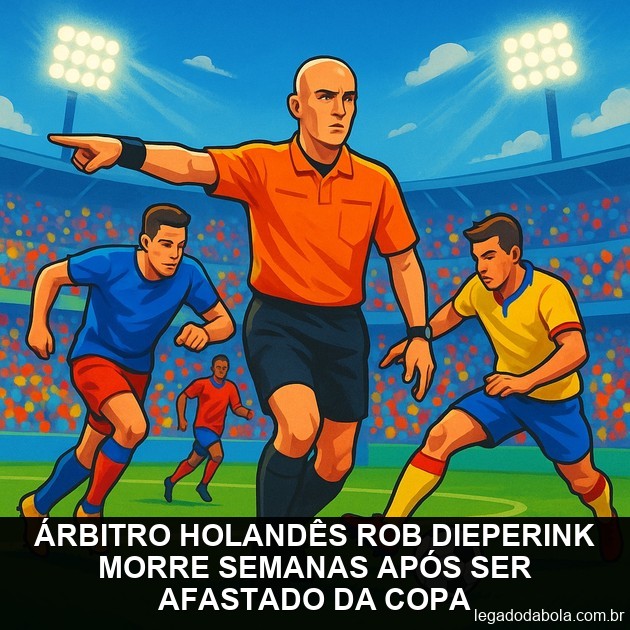
Football was shaken by the news that Dutch referee Rob Dieperink has died at age 38. The case is made even more dramatic by the fact it comes just weeks after he was removed from the list of referees set to officiate at the upcoming World Cup.
Referees rarely make headlines unless it is over a controversial call. Dieperink's death, however, exposes a rarely discussed side of the profession: the extreme pressure and personal consequences of decisions made off the pitch.
The death comes amid an ongoing police investigation in the UK that led to his removal from the tournament.
Understanding this case matters not only for its human dimension, but also because it raises questions about how federations handle referees involved in legal proceedings before final sporting decisions are made.
What Happened
According to information reported by BBC Sport, Rob Dieperink was among the names selected to represent the Netherlands in officiating at the next World Cup. Weeks before his death, he was removed from the list of appointed referees.
The reason for his removal was an ongoing police investigation in the United Kingdom involving the referee. Specific details of that investigation had not been fully disclosed publicly at the time of the original report.
Dieperink died at 38, an age that would typically correspond to the mature, experienced phase of a top referee's career, when many officials reach their technical peak and become candidates for the world's biggest tournaments.
Impact on the Tournament
Dieperink's removal from the World Cup officiating list had already caused ripples within the Dutch refereeing setup even before his death. Losing a spot at the world's biggest tournament is a heavy blow to any referee's career.
Now, with his passing, the Dutch refereeing body permanently loses one of its most highly rated names. This forces the organization to reshuffle its pool of referees available for international competitions.
FIFA and the confederations involved in organizing the World Cup will also likely need to review their protocols for selecting and removing referees amid ongoing investigations, a sensitive topic that now carries even more weight given this tragic outcome.
Reaction From the Football World
The European refereeing community received the news with sorrow. Colleagues and federations typically express solidarity in such cases, acknowledging the emotional and psychological toll on referees facing public scrutiny.
The case reignites debate over mental health support for referees under extreme pressure, both on and off the pitch.
Fans and pundits, for their part, tend to react with caution in cases involving unresolved police investigations, avoiding premature conclusions about guilt or innocence and respecting the grief of family and loved ones.
It is natural that European sports media will continue to follow developments in the case, particularly regarding the details of the police investigation that led to his original removal.
Relevant History
Elite refereeing has always been an environment of extremely high pressure. Referees who reach World Cup level go through years of rigorous technical and physical evaluations before being deemed fit by FIFA.
Cases of referees being dropped just before major tournaments are not unheard of, but they are rarely tied to formal police investigations.
Historically, international refereeing scandals have typically been linked to suspicions of match manipulation or on-field irregularities. Dieperink's case, involving a police investigation in the UK, breaks from that more common pattern and draws attention for its distinct nature.
The Dutch football federation has a tradition of producing internationally well regarded referees, and losing a name in contention for the World Cup is a setback to that ongoing development work.
Numbers and Statistics
Although technical details of Dieperink's career were not widely disclosed in this report, a few numbers help illustrate the gravity of the situation.
These numbers, though limited, show how the outcome unfolded within a short timeframe, underscoring how quickly an investigation and a professional setback can weigh on someone.
What Comes Next
The Dutch refereeing federation is expected to make an official statement about the case and about how it plans to fill the vacancy left by Dieperink on the World Cup officiating roster.
More details about the UK police investigation are also expected to emerge in the coming days, which could help clarify the full context behind the referee's original removal.
FIFA, for its part, is likely to maintain public discretion out of respect for the mourning period, but internally it should review how it communicates and handles removals tied to ongoing legal proceedings.
Expert Opinion
Cases like Rob Dieperink's expose a rarely discussed reality in football: referees are also human beings subject to pressures that go far beyond the whistle and the yellow card.
When a professional is removed from a tournament as significant as the World Cup because of an ongoing investigation, the psychological toll can be devastating, regardless of the legal outcome. Football needs to build a stronger support network for referees, just as urgently as it already does for players.
The lesson here is that the mental wellbeing of elite referees needs to become a genuine priority for federations and FIFA, with permanent psychological support structures, especially during personal and professional crises like the one Dieperink faced in his final weeks.
The death of a referee just weeks after being dropped from the World Cup is a stark reminder that football's pressure does not spare those blowing the whistle.