Context and Importance
The Brazilian National Team reaches the round of 16 of the 2026 World Cup on an upswing that reassures fans. After a start full of doubts, Carlo Ancelotti's side began to show something it lacked: a clear identity on the pitch.
The recent run helps explain the mood. The worrying draw with Morocco raised the alarm, but wins over Haiti and Scotland restored confidence to the group. It was an important relief in the knockout stage.
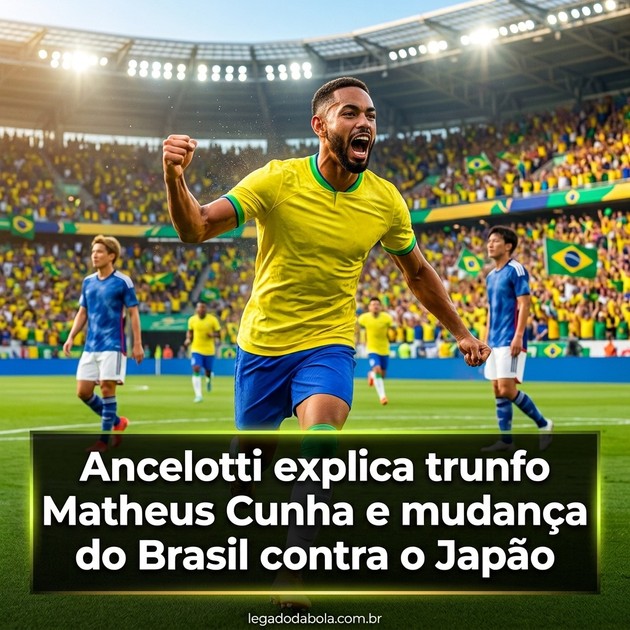
Now Ancelotti's words carry weight. By naming Matheus Cunha as a trump card and anticipating changes for the match against Japan, the coach shows he has a plan and is willing to tweak the team even after wins.
What Happened
In an interview, Carlo Ancelotti stressed that Matheus Cunha gave Brazil a competitive edge. The coach valued the forward's traits and what he brings to the team's attacking system.
Beyond the individual praise, the Italian signaled adjustments for the clash with Japan in the World Cup knockout round. The message was clear: Brazil can change its approach depending on the opponent.
The remark comes amid collective growth. After the slip against Morocco, the displays versus Haiti and Scotland brought individual brilliance and more solidity, giving Ancelotti room to test pieces and roles.
Impact on the Team and the Competition
Calling Matheus Cunha an advantage shifts the reading of Brazil's attack. The player adds versatility, the ability to create chances and to appear in different zones, something precious in knockout games.
For Brazil, the tactical flexibility announced by Ancelotti could be decisive. Knowing how to switch between control and speed, depending on how Japan behaves, is the kind of detail that separates who advances from who falls early.
On the World Cup board, a rising team worries rivals. Sides that start poorly and click at the right time tend to be the most dangerous, and Brazil seems to fit that script.
Reaction From the Football World
Ancelotti's reading echoed among fans and the sports press. Publicly valuing Matheus Cunha reinforces trust in a name that had been seeking space and a leading role in the squad.
Part of the Brazilian crowd breathes easier with the team's growth after the Morocco scare. The general feeling is that the group found a path and gained maturity in the tournament.
At the same time, expectation grows around the duel with Japan. The promise of changes fuels debate over lineup and approach, with fans split between keeping the base or trusting the adjustments.
Relevant History
The clash between Brazil and Japan always carries symbolism. They are different football schools, and the Asian side has improved greatly in recent decades, no longer a mere supporting act at World Cups.
Japan built a reputation as an organized, intense and tactically disciplined team. Underestimating the opponent would be a mistake, and Ancelotti's talk of adjustments shows respect for that competitive profile.
For Brazil, history in knockouts teaches that details decide. Focus, efficiency in front of goal and game reading usually weigh more than the fame of the names involved.
Numbers and Statistics
In the recent run, the Brazilian script became clear: a draw with Morocco and wins over Haiti and Scotland. Three results that sum up the team's turning point.
This improvement shows both in performance and in the sense of control on the pitch. Brazil moved from insecurity to confidence in just a few games.
Now the challenge is turning this moment into consistency in the knockouts, where there is no room for slips. Against Japan, every statistical detail, from possession to finishing, can be decisive.
What Lies Ahead
The next chapter is the round of 16 duel against Japan. It is the kind of game in which Brazil must combine recent individual brilliance with the collective solidity earned in the last matches.
The changes announced by Ancelotti will be the central point of preparation. It remains to be seen which pieces the coach will move and how Matheus Cunha will be used in this game plan.
If it gets past Japan, Brazil keeps marching on in the 2026 World Cup. The goal is clear: sustain the momentum and arrive strong in the decisive stages.
Expert Opinion
What stands out most in Ancelotti's stance is the courage to make changes even after wins. Coaches who adjust out of tactical need, not pressure, tend to build more mature teams.
Betting on Matheus Cunha as a trump card makes sense. The forward's versatility gives Brazil more attacking solutions, essential against organized opponents like Japan.
In the end, the team's upswing is the most positive sign. A side that learns from the Morocco scare and improves each game tends to be very dangerous in the final stretch of the Cup.