Context and Importance
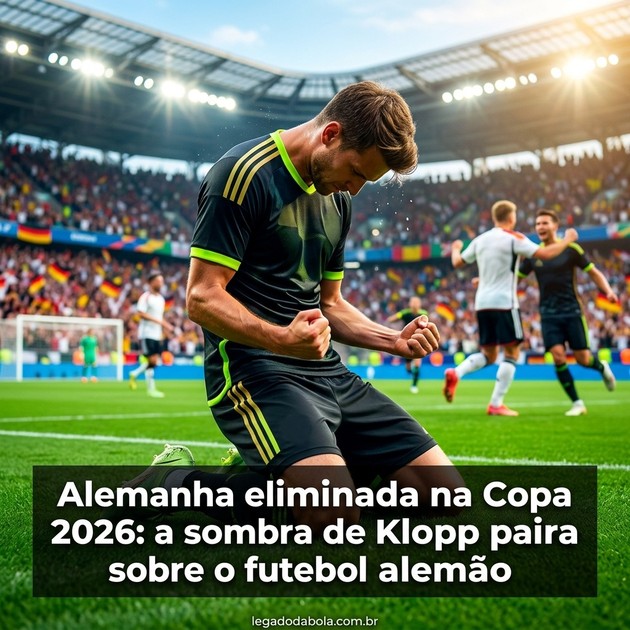
Germany suffered another World Cup nightmare. The national team that dominated world football for decades was eliminated by Paraguay at the 2026 edition, held across the United States, Canada and Mexico. The defeat reopened a wound that never fully healed since the 2018 humiliation in Russia, when Germany crashed out in the group stage.
What is at stake goes beyond a single bad result. It is the credibility of one of the greatest footballing powers on the planet. Germany has not won a World Cup since 2014, and each early exit deepens the identity crisis surrounding the national team.
It is against this backdrop of despair that the name of Jurgen Klopp grows louder. The manager who revolutionized Liverpool and made history at Borussia Dortmund is widely seen as the man capable of restoring German pride.
What Happened
Germany was eliminated by Paraguay at the 2026 World Cup. The result shocked the footballing world, as the Germans had entered the tournament as serious title contenders. The squad led by Julian Nagelsmann failed to break down Paraguay's defensive organization and paid a heavy price for its errors.
The defeat raised serious questions about the tactical setup, squad selection and the manager's ability to get the best out of the available players. The exit reignited the debate about a structural collapse in German football, which has lost technical identity and aggression in recent years.
Nagelsmann, already facing criticism at home, now finds his position under terminal threat. Pressure for a radical change of leadership is immense, and the DFB, Germany's football federation, will need to respond quickly.
Impact on the National Team and Competition
For the German national team, the impact is devastating. Germany once again fails to reach the later stages of a World Cup, the sport's greatest stage. Fan frustration is turning directly into demands for deep-rooted reform.
Manager Nagelsmann is immediately under scrutiny. Talks about his dismissal will intensify in the days following the elimination. The DFB must decide whether to keep or release the coach, and each option carries its own risks and opportunities.
For the tournament itself, Germany's absence from the decisive rounds is a loss in terms of audience interest and global appeal. The German national team is one of the most recognized brands in world football, and their presence in the semifinals always draws enormous attention.
Reaction from the Football World
The German media reacted with dismay and anger. The country's main sports outlets demanded answers and pointed to tactical failures, a lack of motivation and poor squad management. The topic dominated sports debate programs in Germany for hours after the final whistle.
On social media, German fans expressed frustration and called for change. Many names were mentioned as potential replacements, but Klopp's stood out clearly, both for his technical quality and the special connection he has with the German public.
Outside Germany, the elimination was treated as further proof that European football has undergone a redistribution of power in recent years. Smaller nations, organized and direct, are proving that history and tradition alone do not guarantee wins on the pitch.
Relevant History
Germany is one of the most decorated nations in World Cup history, having lifted the trophy four times: in 1954, 1974, 1990 and 2014. For decades, the national team was synonymous with efficiency, determination and results. But that winning cycle feels far removed from the current reality.
In 2018, Germany were knocked out in the group stage in Russia, a historically humiliating result for a team of their stature. In 2022, in Qatar, the Germans again fell at the earliest possible stage. Now in 2026, history repeats itself once more.
That is three consecutive World Cups without meaningful progression. For a country that built its sporting identity around football, this represents an unprecedented crisis in the modern era. The comparison with the 2014 world Champions, who played high-quality collective football, is both inevitable and painful.
Numbers and Statistics
Germany holds four World Cup titles, placing them among the tournament's greatest winners alongside Brazil, who have five. However, the country has not won a World Cup in over a decade, since their victory in Brazil in 2014.
Since that title, Germany have played in three World Cups and failed to advance from the early stages in all of them. It is a long drought for a team accustomed to reaching semifinals and finals. Their scoring average and points record at recent tournaments point to a worrying decline in offensive output.
Nagelsmann's contract with the DFB was aligned with the World Cup cycle, and the elimination throws any renewal into serious doubt. The German federation will need to act quickly to stop losing further ground in the rankings and in the confidence of the fans.
What Comes Next
The immediate priority for Germany is deciding the future of manager Nagelsmann. The DFB is expected to meet in the coming days to assess whether to continue with the coach or move on. Public and media pressure favors change, but the federation rarely acts impulsively.
If Klopp's name is formally approached, negotiations promise to be lengthy and complex. The manager has been available since leaving Liverpool in 2024, but taking charge of a national team is a different kind of commitment from managing a club. Klopp has publicly suggested he is resting, but the chance to lead his own country could change that calculation entirely.
The next major window for Germany will be the UEFA Nations League and the qualifying campaign for Euro 2028. Whether with Nagelsmann or a new manager, the rebuilding process must begin immediately if Germany is to reclaim its place among the powers of world football.
Expert Analysis
Germany's crisis is not purely technical. It is structural. The player development model that produced the 2014 generation has been eroded, and the current squad has never found a clear and consistent playing identity. Without identity, any manager will struggle.
Klopp would undoubtedly be a breath of fresh air. His charisma, his ability to motivate players and his tactical intelligence are beyond question. But even Klopp would need time to build a new structure, and German football has already lost too much time.
What Germany needs is not just a famous name on the bench. It needs a long-term project, with consistent player development, a defined tactical identity and patience to rebuild. Klopp could be the catalyst for that process. But the real work goes far beyond what any single manager, however talented, can do alone.