Context and Importance
When the talk turns to the coaches dominating European football, three names keep coming up: Mikel Arteta, Xabi Alonso and Andoni Iraola. Their careers look separate. They are not.
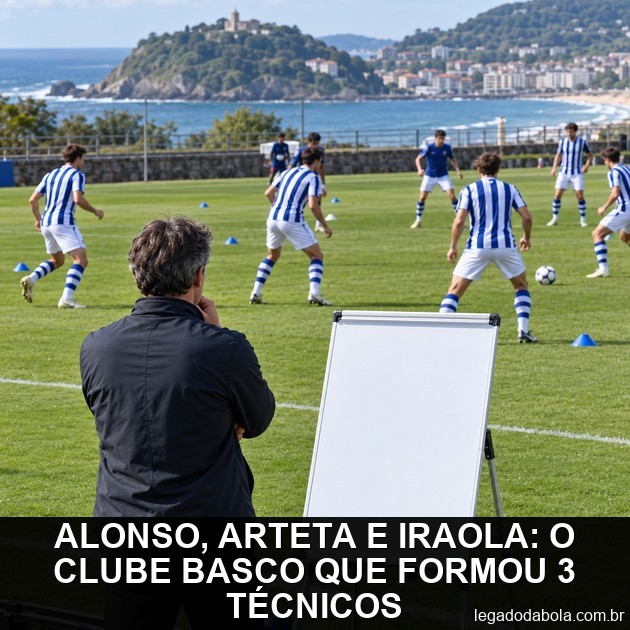
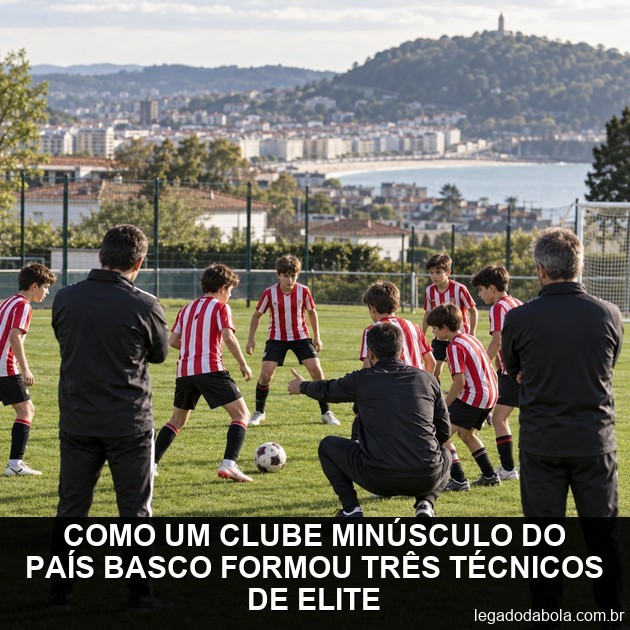
All three grew up on Spain's northern coast, around San Sebastian, and passed through Antiguoko, a small neighborhood club far from the spotlight and the big budgets.
The story matters now because big clubs in the Premier League, the Champions League and even national teams look to the Basque Country when hiring. The question is obvious: what is só special about this corner of the map?
A single neighborhood club in San Sebastian appears in the development of three top-level coaches in European football.
What Happened
ESPN published a report linking the three coaches to the same starting point. The common thread is Antiguoko, a youth-development club in San Sebastian, a Basque city on the Atlantic.
Arteta was born in San Sebastian, Alonso in Tolosa and Iraola in Usurbil. All from the province of Gipuzkoa, a few kilometers apart.
The report argues that hiring a coach from this region has become an almost safe bet. It is no guarantee of titles, but it signals that the local development model produces well-prepared leaders.
Impact on the Club, the Team and the Competition
The most visible impact is in the Premier League, one of the most competitive leagues on the planet. Basque coaches influence playing styles, pressing patterns and even locker-room culture.
The message for clubs is direct. Investing in youth development and football education pays dividends years later, in ways nobody planned.
For national teams and for competitions such as the World Cup, the lesson holds too. Countries that train coaches, not only players, harvest clearer ideas about the game.
Developing football people is worth as much as developing stars.
Reaction from the Football World
Specialized media treat the subject with curiosity and admiration. It is rare to see three highly successful careers come from such a small spot on the map.
Among fans the debate is playful. Many joke that you only need to check a résumé's origin to know who will be the next name the big clubs chase.
One caution: the report does not promise automatic results. It shows a trend, and trends need proof over time.
Relevant History
Xabi Alonso won the 2010 World Cup and the European Championship in 2008 and 2012 with Spain. As a player he was at Liverpool, Real Madrid and Bayern Munich.
Mikel Arteta played for Real Sociedad, Everton and Arsenal, among others. He became Arsenal's manager in December 2019 and won the FA Cup in his first season.
Andoni Iraola built a career as a center-back and full-back at Athletic Bilbao. As a coach he rose to prominence at Rayo Vallecano and then at Bournemouth in the Premier League.
In 2023-24, Alonso led Bayer Leverkusen to the German title without losing a single Bundesliga match, a historic feat.
Numbers and Statistics
The clearest numbers are about origin. Three coaches, one region and a neighborhood club in common.
There are also individual marks. Alonso has a World Cup and two European Championships as a player, plus the unbeaten German title as a coach.
Arteta, for his part, has led Arsenal since late 2019, a long tenure by today's standards.
What Comes Next
The next chapter is in the hands of the clubs. Those hiring a coach should pay close attention to origin and to the environment where the coach was formed.
The three coaches remain in the spotlight and may gain even more space, in the Premier League, the Champions League or on the international scene.
It remains to be seen whether Antiguoko and other small clubs in the region can repeat the feat with a new generation.
Expert Opinion
My reading is simple. What unites these three is not just the map, it is a football culture. In the Basque Country, the ball on the ground, collective reading and tactical discipline are valued from an early age.
That explains why their coaches speak the same tactical language, even with different accents. It is development, not coincidence.
When a tiny club shapes three elite coaches, it is not luck. It is method, patience and an environment that teaches how to think the game.
For Brazil the lesson is clear: there is plenty of hidden talent in small clubs. They just need the structure to teach.